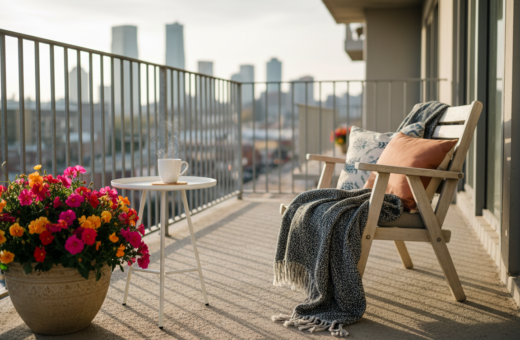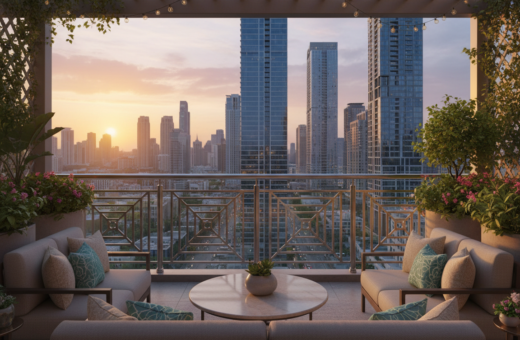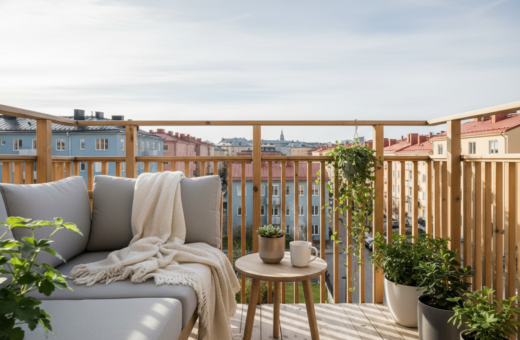
Small outdoor spaces can become calm retreats with the right approach to light. In many U.S. buildings, units sit close together, so controlling brightness matters for neighborly harmony.
They should pick soft, warm tones around 2200K–3000K to keep evenings gentle and pleasant. Shielded fixtures and downward-directed fixtures help keep glare out of nearby windows.
Practical choices include modest strings, frosted lanterns, and rechargeable table lamps that stay within a tenant’s zone. Using timers, dimmers, and local controls ensures lights do not stay bright late into the night.
For more tips on neighbor-friendly setups and fixture selection, readers can consult a practical guide on thoughtful installations at apartment balcony and patio lighting.
Setting the Mood with Balcony Lighting Ideas
They should decide on low, focused illumination that highlights the seating area without spilling into neighbors’ windows. This approach makes the small outdoor space feel private and calm.
Start with a clear goal: keep light local and warm so the area reads as a second living room. Direct fixtures inward and aim at seating rather than the courtyard.
Designers recommend treating the area as a defined room. That lets lights set boundaries and create a cozy flow for evening use.
- Pick soft sources that cast a gentle glow over chairs and tables.
- Position fixtures to avoid glare in nearby bedrooms.
- Use dimmers or timers to limit reach and keep the mood intact.
“A focused scheme is the best way to maintain intimacy while staying neighbor-friendly.”
Prioritizing Neighbor-Friendly Illumination
Uncontrolled spill from outdoor fixtures often creates tension between neighbors in multiunit housing. A practical, respectful approach keeps the shared building calm and reduces complaints.
Residents should check whether fixtures shine into adjacent windows or common areas. Testing lights at night is the simplest way to spot unwanted glare.
Simple steps include pointing fixtures inward, using low-glare options, and swapping bright bulbs for warmer, lower-output ones. Dimmable fixtures and timers let users control brightness during quiet hours.
Respecting quiet hours
Most U.S. apartment communities expect reduced use of outdoor lights after certain hours. Using timers or smart plugs ensures the area respects those rules without extra effort.
- Direct lights away from neighboring windows and living spaces.
- Choose low-glare fixtures to avoid shining into other units.
- Test your setup at night and adjust angles or brightness as needed.
“Prioritizing neighbor-friendly illumination builds a more harmonious living environment for everyone.”
Selecting the Right Color Temperature and Brightness
A cozy glow comes from matching soft color temperature with modest lumen counts for compact outdoor spaces.
Choose warm white tones between 2200K and 3000K. This range is easier on the eyes and reduces harsh spill into neighboring units.
Keep overall brightness low. For most small patios and balcony nooks, 200–800 lumens is sufficient. Avoid high-lumen bulbs that create glare.
- Select warm white bulbs in the 2200K–3000K range for a relaxing feel.
- Aim for 200–800 lumens total to light the space without overwhelming neighbors.
- When mounting on a wall, direct light downward to limit spill and glare.
- Pick dimmable or lower-output options to adjust mood and control reach.
“Proper color temperature and controlled brightness make a small balcony feel like an inviting extension of the home.”
Utilizing Shielded Fixtures to Minimize Glare
Shielded fixtures keep light focused on your space while cutting glare that travels to neighboring windows.
Directing illumination matters. Wall sconces with shades send light down and inward, so the area stays useful without spilling into other units. Lantern-style options with frosted glass soften beams and reduce harsh hotspots.
This approach balances comfort and respect. A thoughtful fixture choice helps the balcony remain a private retreat while still offering enough light for reading or relaxing.
Choosing Frosted Glass Options
Frosted glass diffuses output, making the glow more even and pleasant. It also lowers perceived brightness, which helps neighbors and reduces complaints.
- Use shielded fixtures to stop glare and prevent lights from shining into nearby homes.
- Pick wall sconces with shades to keep the beam aimed at your floor area.
- Choose frosted glass options for a soft, diffused glow from your light fixtures.
- Follow a simple design plan so the setup feels cohesive and suits your home.
“Shielded fixtures offer control and comfort, making shared living spaces calmer and more respectful.”
Creating Ambiance with String Lights
String lights work best when they are installed inside the railing line so the soft glow stays contained and respectful of neighboring units.
Choose warm white LED strings with modest brightness to prevent the outdoor area from turning into a distracting display. Low-output bulbs keep the atmosphere calm and readable for evening use.
Use a timer or smart plug to switch the set off at a reasonable hour. This saves energy and reduces potential complaints from nearby residents.
- Hang strings inside the railing to keep the glow inward and controlled.
- Pick warm white LED bulbs and avoid intense, work-light style bulbs.
- Use a timer or smart plug so balcony lights turn off automatically.
- Position lines thoughtfully; the way they sit affects how neighbors perceive the space.
“With careful placement, string lighting transforms a small outdoor area into a cozy retreat.”
Layering Light with Portable Lamps and Candles
Combining battery table lamps with low-profile lanterns creates layers that feel intentional and refined. This approach lets residents adapt the small outdoor space for dining, reading, or quiet conversation without hard wiring.
Rechargeable Table Lamps
Rechargeable table lamps bring focused light to a dining table or a reading nook. They remove the need for new wiring and keep cords off the floor.
Choose dimmable models with warm tones to match other fixtures. A single lamp can define a seating zone and give a neat, high-end look.
LED Candle Benefits
LED candles mimic flame warmth with almost no spill. They are safer than open flame and reduce glare that travels to nearby units.
Floor Lantern Placement
Place floor lanterns near seating or corners to anchor the layout. Low-profile lanterns keep the focus inside your footprint so neighbors are less affected.
- Mix table lamps, lanterns, and LED candles for flexible glow options.
- These portable choices suit renters and enhance the look without permanent change.
“Layering portable lights creates a balanced, neighbor-friendly outdoor room.”
Strategic Placement for Downward and Inward Glow
Place fixtures so beams fall on the floor and wall, not into neighboring windows. A quick night check from the courtyard helps spot spill and glare.
Adjusting heads to tilt downward keeps the glow aimed inward and keeps the seating area private. This simple move cuts complaints and improves comfort.
When mounting lights, imagine standing in the unit across the way. If a fixture would shine into that window, change its angle or switch to a shielded model.
- Direct beams downward to light the floor and wall instead of the wider complex.
- Test at night from neighboring sightlines to check for spill or glare.
- Even a small tilt changes distribution; aim for focused, inward illumination.
- Keep the glow inside your own space so the area stays relaxing and usable for reading or dining.
“Focused placement makes a small balcony feel like a private room without disturbing neighbors.”
Managing Light with Timers and Dimmers
Automating power with timers keeps evening fixtures predictable and neighbor-friendly. Timers and dimmers let residents control when and how brightly a space runs, so the building exterior stays calm after dark.
Benefits of Smart Plugs
Smart plugs make automation simple. They allow lights and low-voltage lamps to switch off at a set hour. This avoids leaving fixtures on all night and saves power.
Dimmers further refine the mood by lowering output as the evening winds down. They let a host move from task-level brightness to a soft glow without changing bulbs.
- Timers and dimmers keep the exterior respectful in multiunit settings.
- Smart plugs provide easy scheduling for strings, lamps, and small fixtures.
- Adjustable output helps set a softer light for late-night use.
- Advanced devices like the Sky Lite Evolve offer phone and voice control for changing effects, including subtle LED scenes.
“By automating schedules, residents ensure their balcony remains a pleasant, unobtrusive space for everyone.”
Incorporating Decorative Lanterns and Pendants
A single rain-glass box pendant can become the focal point above a bistro table and set the room’s tone. It gives a warm, café-style glow that feels both stylish and practical.
Decorative lanterns work well when grouped near seating. Placing them on the floor creates a clear pool of glow that defines the space without blocking traffic or crowding the center.
Pendant lights make a strong visual statement when chosen to match furniture and finishes. Proper installation keeps the fixture low enough to light the table but high enough to preserve sightlines to the sky.
- Choose a rain-glass pendant as a statement fixture above a small table.
- Group lanterns near seats to create layered pools of light.
- Match fixtures to your furniture for a cohesive, finished look.
- Use portable lamps and a short string of low‑output lights for flexible accents.
“Well-placed pendants and lanterns elevate the space while keeping it comfortable and neighbor-friendly.”
Enhancing Atmosphere with LED Strips and Accents
LED accents can add depth without taking up floor area, quietly changing how an outdoor nook reads at night.
Dual-glow LED strips hidden beneath a handrail create a thin, floating band of light along the edge. This keeps the focus inside the unit and frames seating without glare.
Color Changing Options
Smart mood lights such as the BlissRadia let residents switch tones by phone or voice. They can go from warm amber to cool color washes in seconds.
Subtle Railing Strips
Subtle railing strips deliver a refined glow that reads as architectural detail. For small spaces, this technique boosts atmosphere without using valuable floor real estate.
- Save space: LED accents add impact without furniture trade-offs.
- Use color scenes to match an evening’s mood or a small gathering.
- Integrate strips into walls or rails for a neat, professional finish.
“Well-placed LED accents transform a compact outdoor room into a purposeful, inviting space.”
Integrating Greenery and Furniture for a Cohesive Look
A few well-placed plants and the right furniture scale can turn a small balcony nook into a layered, livable room. Start by measuring the space so a table, chairs, or floor pillows fit without crowding.
Integrate plants and fixtures so greenery softens edges and helps lights fall on seating. Group pots at different heights to create depth and to catch warm accents from pendants or string lights.
Pick furniture that matches the scale of the area. A slim table for dining or a low bench for living use keeps circulation clear and makes the space feel intentional.
- Blend elements: mix plants, textiles, and fixtures for a unified look.
- Plan sight lines: place seating where light hits surfaces, not faces.
- Use flexible pieces: foldable chairs, a small table, or floor cushions add function without permanence.
“A clear plan for plants and furniture helps the balcony feel like a private garden room.”
Checking Building Regulations and Community Guidelines
Before any installation, check your building’s rules so you avoid costly rework or fines. Many U.S. apartment communities limit what can be mounted on an exterior wall or railing. Reviewing those policies early saves time and keeps projects compliant.
Consulting with Neighbors
A short, friendly conversation with adjacent residents can head off problems. Asking about sight lines and preferred hours shows respect and builds goodwill.
- Checking building regulations is a critical step before starting any balcony project to remain in compliance.
- Many associations restrict attachments to walls or rails to maintain a uniform exterior.
- Discuss your lights and small outdoor lighting plans with neighbors so the evening use is acceptable to everyone.
- Understand quiet hours and light policies so your setup fits community rules.
By being proactive and respectful, residents can enjoy their outdoor space without worries.
“A brief check of rules and a quick chat with neighbors prevents many conflicts.”
Conclusion
A smart placement of soft tones and shields helps a small balcony feel like a calm second living room. Use warm LED bulbs, shielded wall sconces, and low-output table lamps to keep the glow inward and pleasant.
Mix string sets, lanterns, and rechargeable lamps for layered atmosphere without heavy wiring. Pick dimmers or timers so lights switch off on schedule and do not bother neighbors.
Check building rules and talk with adjacent units before installing fixtures. Brands such as Seus Lighting and 7Pandas offer many renter-friendly options to achieve the right look and function for evening use.