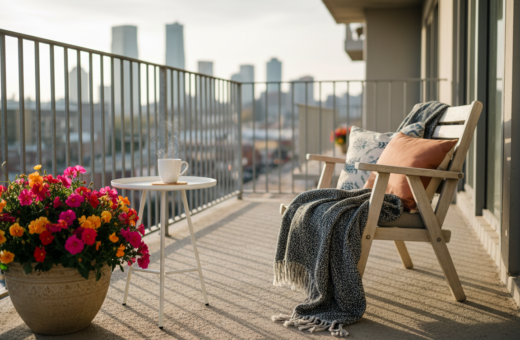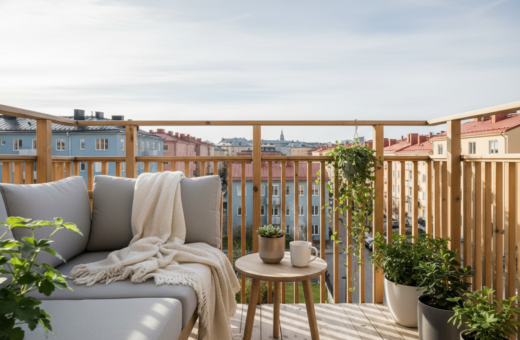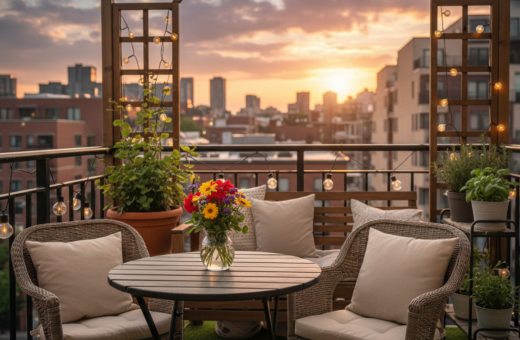
Designers say the shift begins when an apartment treats its balcony as a true extension of the home. At Beit Trad in Lebanon, vaulted ceilings and graceful arches make the terrace read like an outdoor room.
That sense of flow matters. When interior tones and materials continue outward, the outdoor space feels intentional and calm. Thoughtful layout turns a narrow ledge into a usable living area.
Practical tips include anchoring a corner with seating and choosing fewer, larger pieces to avoid clutter. Balancing a house’s architectural history with modern comfort makes time spent outside feel as relaxed as time inside.
For design examples and practical planning advice, readers can consult a roundup of approaches at creative apartment balcony solutions. Simple shifts in scale, texture, and lighting transform ordinary spaces into layered, inviting places for living.
Treating the Balcony as an Interior Extension
Treating the outdoor ledge as part of the home starts with a simple color story that moves seamlessly through the threshold. This approach helps spaces feel intentional rather than tacked-on.
An interior designer will often advise mirroring the indoor palette to make the outdoor area read as a curated room. Selecting complementary colors for cushions and rugs reinforces that continuity.
Matching Furniture Silhouettes
Matching the silhouettes of outdoor pieces to interior forms creates a refined visual link. For balconies with odd angles—such as Frank Gehry-designed projections—choose simple, well-measured furniture that fits the specific corner.
“By focusing on the flow of colors from the inside out, you ensure that your balcony feels like a curated part of your home.”
- An interior designer recommends a mirrored palette to keep things cohesive.
- Lean into awkward geometry by selecting furniture for each corner.
- Use matching silhouettes to blur the line between rooms.
Selecting Luxury Small Balcony Ideas for Compact Spaces
Start by sizing each piece to the exact footprint so circulation stays open and the view remains dominant. In Menorca, designer Lorenzo Castillo used the blues of sea and sky to let the scenery set the palette.
Focus on scale: pick furniture that matches the floor area and leaves clear pathways. One well-chosen chair and a low table often serve better than several crowded pieces.
Let the outlook lead decisions. If an apartment balcony frames a sea or city vista, place seating to face it. That preserves a sense of openness and makes the space feel deliberate.
- Choose multifunctional pieces that store or fold away.
- Prioritize comfort—soft cushions and a slim rug keep the area inviting.
- Use a restrained palette so the view remains the focal point.
With careful selection of pieces and proportion, even compact outdoor space becomes a refined place to relax or entertain. These practical tips help transform tight terraces into memorable destinations.
Maximizing Comfort with Textural Elements
Adding tactile fabrics is one of the fastest ways to make an outdoor ledge feel cozy and intentional. Textures warm the tone and invite people to sit and stay.
Layering Outdoor Textiles
A professional designer often layers rugs, throws, and sheepskins to soften hard edges and enrich the decor.
Studio Peregalli’s Milan restoration shows how foliage and vintage iron chairs turn a rail into a secret garden room. When a lush screen frames the view, plush seating and a tiny table make the balcony feel like an additional living area.
“Proper light and textural layering are essential to make an outdoor space read as a private, comfortable sanctuary.”
- Warmth: layer a rug, then add cushions and a throw for tactile depth.
- Function: include furniture that supports lounging, like a low chair and table.
- Ambience: combine soft fabrics with warm light to extend time spent outside.
Small moves—a sheepskin, a weighted rug corner, a focused lamp—transform a plain space into a welcoming spot for reading or conversation.
Creating a Secret Garden Atmosphere
Layering potted trees and trailing plants creates a living veil that shields the view and soothes the senses. This is the most direct way to add privacy to an apartment outdoor space.
Jean Louis Deniot transformed a Miami beach penthouse ledge by placing a vintage Ilmari Tapiovaara rocking chair and a 1960s rattan chaise at the side. The placement made the arrangement feel like a room rather than a passage.
- Plants as screens: Use a mix of heights and leaf types to block sightlines and add texture.
- Grounded floor: Natural decking or stone anchors the area and deepens the garden effect.
- Thoughtful seating: Arrange chairs so they face inward to enhance seclusion and comfort.
- Layering: Combine tall pots at the rail with lower planters near the door for depth and privacy.
With careful placement of greenery and furniture, a balcony can become a private, calm retreat. The right plants and floor materials create a way to enjoy the outdoors without exposure to neighbors or the street.
“A well-placed rocking chair and a screen of plants can turn a narrow ledge into a hidden garden room.”
Leveraging Vertical Space for Privacy
Using vertical layers can turn an exposed terrace into a private retreat without crowding the floor. Designers often prioritized upward planting to keep the seating area open and airy.
Vertical Garden Installations
Mounting planters, living walls, or slim trellises creates a green screen that protects sightlines. This approach keeps the floor clear for chairs and traffic, while the space reads as an outdoor room.
Vertical Garden Installations
Large-scale installations can make a dramatic buffer against neighbors and street view. Harry Heissmann transformed the Silo Ridge terrace into an entertaining spot using tall greenery, roomy wicker furniture, and large lanterns to define the area.
Hanging Planter Arrangements
Hanging pots and rail-mounted planters add lush plants without eating square footage. They turn a plain railing into a layered screen that improves both shade and privacy.
- Vertical greenery preserves floor space and makes the spot feel more secluded.
- Combining tall pots with hanging planters increases depth and texture.
- Thoughtful placement ensures the seating area remains functional and private.
“When you prioritize privacy, vertical greenery acts as a natural screen that makes a balcony feel like a secluded garden.”
Choosing Durable Materials for Longevity
Durable finishes keep an outdoor ledge looking like a deliberate part of the home rather than a temporary afterthought.
Selecting the right materials matters when a balcony is meant to read as an extension of the living room. Mark Grattan left the wraparound ledge of his Luis Barragán–designed apartment bare to honor the original surfaces and the house’s architecture.
Investing in high-quality, weather-resistant surfaces protects the investment. It also helps the outdoor room age well and remain usable through changing seasons.
- Pick finishes that resist moisture and UV to reduce long-term repairs.
- Choose materials that match the interior palette so the living room and outdoors feel connected.
- Plan simple maintenance routines to keep surfaces and fixtures performing well.
“Sometimes the best design choice is restraint: preserving original materials preserves the design intent.”
With careful selection and upkeep, a balcony can serve the house for decades and remain a refined, functional extension of everyday life.
Incorporating Statement Lighting
Thoughtful illumination makes an outdoor edge feel welcoming and improves how the space functions at night. Designers use light to create zones, draw attention to plants, and give the area a clear purpose after dark.
Ambient String and Portable Lamp Options
String lights and portable lamps are simple ways to lift the mood. Lucia Silvestri used careful lighting to turn her Puglian courtyard into a blissful, elevated retreat with planters by Enza Fasano.
Wrap ambient lights around a railing to outline the edge and add soft glow. Place a small table near that rail so one can enjoy the light while seated.
Choose furniture and lamps that balance scale. A low lamp or battery-powered lantern keeps the area cozy without harsh glare.
- Use dimmable or battery-powered options for flexibility.
- Layer overhead strings with a portable table lamp for task light.
- Select fixtures rated for outdoor use to protect the decor and hardware.
“Ambient lights wrapped around a railing can transform a simple balcony into a magical, high-end entertaining area.”
Designing for Specific Uses
Decide first what the outdoor area will do for daily life—dining, reading, or casual lounging.
Designing with a clear purpose lets every piece earn its place. When a space is meant for meals, pick a compact table and weatherproof chairs. If it’s for rest, choose a low lounger and soft textiles.
Bill Brockschmidt made the entry to his Sicilian palazzo striking by having the doorframes hand-painted Federal Blue by the Old-Fashioned Milk Paint Company.
This choice proves that a skilled designer can elevate any area with one confident move. A bold entry color signals the intended use and sets the mood for the entire outdoor room.
“A defined purpose helps every selection support daily rituals.”
- Design for a single primary use so furniture and lighting align with activity.
- Keep circulation clear so the intended function feels effortless.
- Choose accessories that support the use—tableware for dining, soft throws for lounging.
By focusing on one clear use, the balcony becomes a purposeful extension of the home. That clarity makes the result feel intentional and inviting.
Enhancing the View with Minimalist Railings
A streamlined guardrail keeps sightlines clear so the cityscape becomes the room’s main feature.
Professional designers often specify slim profiles to let the panorama lead the design. Alvisi Kirimoto kept a top‑floor Roman balcony deliberately simple so residents could better appreciate the Colosseum.
Thin metal or glass rail systems provide safety without blocking the horizon. That restraint makes the outdoor area feel larger and more connected to its surroundings.
When visual clutter is minimized, natural elements and the distant skyline define the character of the space. This approach works for any apartment that benefits from an unobstructed outlook.
- Use narrow posts or frameless glass for clear sightlines.
- Choose finishes that recede against the view.
- Prioritize balance: safety first, then transparency.
“A simple railing lets the view do the design work.”
Playing with Bold Planters and Greenery
Playful containers—like a ceramic wrapped in an octopus motif—introduce surprise and character to the balcony. The piece in Savannah, Georgia, proves how one sculptural planter can change the entire look of an outdoor garden.
Bold planters act as functional art. Pairing that pot with a small table and comfortable chairs balances visual interest with use. The result is a confident, curated space that invites lingering.
Choose plants that suit sun, shade, and wind so the display stays healthy. Thriving plants keep the composition fresh and prevent the planter from becoming mere decoration.
- Use one dramatic pot as an anchor and add a few green companions for depth.
- Mix textures—glossy leaves, trailing vines, and upright grasses—to enrich the look.
- Let the table and chairs remain functional; functionality keeps the garden usable.
“A single, unexpected planter can redefine a rail and turn a passing spot into a place to stay.”
Utilizing Flexible Furniture Solutions
Choosing movable pieces makes it simple to reconfigure an outdoor area for different hours of the day. Flexible furniture helps a balcony perform many roles without permanent changes.
Collapsible Bistro Sets
Collapsible Bistro Sets
Collapsible bistro sets offer a neat way to add a table and two chairs when needed, then stow them to free up floor space.
- A folding table gives a reliable surface for morning coffee or an evening meal.
- Lightweight chairs tuck away easily and are simple to move to the side.
- Choose weather‑rated pieces that resist sun and light rain for low maintenance.
Lightweight Poufs
Poufs add flexible seating without bulk. They slide under a table or stack by a door so the space can shift quickly.
Shelton Mindel outfitted a Miami balcony with outdoor furniture from Restoration Hardware to create a dedicated dining area that still adapts for entertaining.
- Portable pieces let the balcony change from dining to lounging in minutes.
- Flexible seating ensures the area remains comfortable and useful for all kinds of use.
Adding Architectural Interest with Flooring
Flooring sets the stage: it frames the view and supports both dining and lounging arrangements.
High‑quality materials underfoot can transform an apartment rail into a coherent outdoor room. Designers Christine and John Gachot, for example, used custom chairs and a Blu Dot table on their NYC terrace and matched the wood tones to make the whole composition feel intentional.
A well-chosen floor treatment—whether patterned tile or long wood planks—creates a clear foundation for outdoor furniture and a durable dining spot. Durable materials also protect the investment and keep the space looking fresh.
- Match wood or tile tones to interior floors to blur the threshold.
- Pick finishes that resist weather so the view and furnishings stay pristine.
- Let the floor pattern guide placement of seating and dining pieces.
“Flooring is a primary design decision; it determines scale, flow, and how people use the space.”
Creating a Cohesive Color Palette
A restrained palette ties disparate elements together so the outdoor area reads as a single, calm space.
Designers often use repetition and contrast to unite different zones on a balcony. For example, matte black planters can ground vivid blooms and make the rest of the scheme feel intentional.
Repeat two or three colors across cushions, rugs, and pots to establish harmony. This approach makes seating and accessories read as parts of one curated composition rather than separate finds.
Keep the base tones neutral and add one bright accent to highlight a favorite feature. Mixing textures—woven, metal, and weatherproof fabric—works because the colors hold the look together.
- Choose a main color, a secondary tone, and one accent for contrast.
- Repeat key colors across textiles and planters to create flow.
- Use a dark grounding color for planters or a railing to frame the view.
“A well-executed color palette is the secret to making an outdoor space feel like an extension of the home.”
Installing Privacy Screens
Adding a screen gives an apartment outdoor space the privacy needed to feel like an extension of the home. A simple structure can block sightlines while keeping light and air flowing. That change makes the balcony into a calm, usable place for daily rituals.
Michelle Vassallo of MV Architects showed how a wood‑clad ceiling and matching floor build warmth and practical privacy. Using timber panels above and below softens the enclosure and adds architectural interest without overwhelming the view.
A well-placed screen lets residents enjoy the outdoors in complete privacy. It also expands how the space is used, from morning coffee to evening reading. Thoughtful materials keep the screen both durable and beautiful.
- Install vertical slats or perforated panels to block sightlines while preserving breeze.
- Choose weather-rated wood or composite for a cohesive floor and ceiling palette.
- Use planters or trellises to add greenery and a second layer of privacy.
“A discrete screen can turn a public-facing rail into a private sanctuary.”
Focusing on Seasonal Enjoyment
To make an outdoor spot useful all year, combine durable furniture with targeted lights and easy-to-store warm extras. This approach ensures the balcony reads as a continuous living area despite changing weather.
Practical tips include adding a small, contained fire pit or a propane heater to create a cozy corner. Pair that with comfortable chairs and weatherproof textiles that can be layered or swapped as temperatures shift.
- Choose durable pieces that resist moisture and UV so the floor and furnishings stay intact.
- Install dimmable lights and a plug for seasonal lamps to extend usable time after dusk.
- Rotate textiles and plants each season to refresh the area without major changes.
Thoughtful planning also protects privacy while keeping the space inviting. With smart choices in pieces, lights, and placement, the balcony becomes a year-round favorite living spot.
Conclusion
A strong, considered plan turns an exterior ledge into a true outdoor room. By treating the balcony as an extension of the interior, an apartment gains extra living space that feels cohesive and intentional.
Privacy and durable materials shape how the area performs over time. Thoughtful layout, quality wood or weatherproof materials, and layered plants create a private, inviting spot that holds its look through seasons.
Whether a designer or a homeowner, prioritizing comfort, the view, and the intended use yields the best results. With simple tips and careful planning, balconies become lasting, personal sanctuaries that enrich the home.