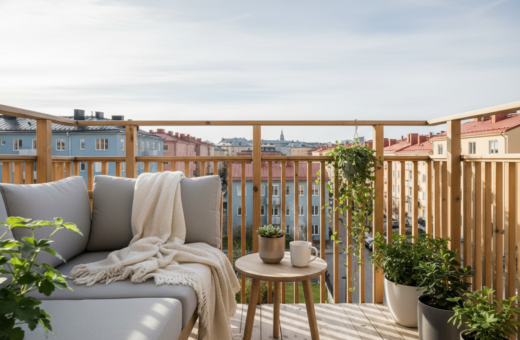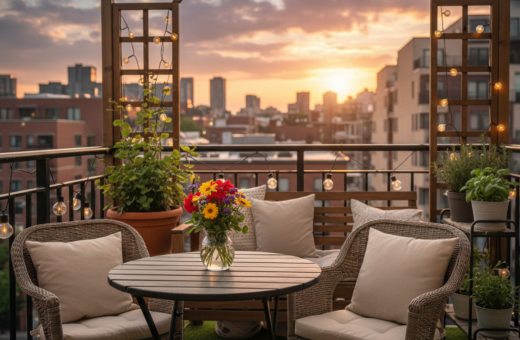
Many city homes have small outdoor areas that sit unused. Units often include a tiny balcony of 24 to 60 square feet. Residents can feel unsure how to treat concrete floors or plain railings.
Designer Ashi Waliany recommends viewing that outdoor corner as an extension of the interior. When treated like an extra room, the area adds flow and value to the whole apartment.
Practical planning makes a big difference. A thoughtful apartment balcony makeover saves time and keeps the limited space functional and stylish.
By focusing on the structure of balconies, someone can turn a plain concrete slab into a cozy retreat. Small changes like portable seating, layered rugs, and planters help the area feel intentional and lived in.
Treating the Balcony as an Interior Extension
Treat the outdoor corner as a deliberate room that extends the interior’s rhythm and palette. This makes the small area feel like part of the home’s plan rather than an afterthought.
Color and texture matter. Ashi Waliany of Cusp Interiors recommends using tones and materials that complement the interior. Anchoring the space with a sculptural console and a faceted black-and-white stool creates a dynamic, collected look.
Cohesive Color Schemes
Match the palette of the interior to create a cohesive look. A restrained color story keeps the space feeling intentional and calm.
Matching Silhouettes
Choose furniture shapes that echo indoor pieces. Mirrored silhouettes help things feel balanced and avoid visual clutter.
“Design the small area as a secondary living zone so comfort flows from inside to out.”
- Select textures that bridge rooms.
- Use a limited color range for unity.
- Prioritize pieces that scale to the small balcony.
Essential Strategies for an Apartment Balcony Makeover
Measure first; thoughtful proportions make a tiny outdoor zone feel intentional and roomy.
Cynthia Masters of Panageries notes most small balconies fall between 24 and 60 square feet. That scale requires choices that deliver comfort without crowding.
Edit furnishings and prioritize seating that folds or tucks away. Choose slim silhouettes and single chairs over bulky sets to keep the area open.
An effective plan treats the spot as a functional patio that invites conversation. Consider how the area connects to the interior so flow and light travel freely between home and outdoors.
“Take the time to edit furniture choices to prevent an overcrowded outdoor space.” — Cynthia Masters
Practical checklist:
- Keep scale modest: one or two compact seating pieces.
- Focus on multifunctional items to save space and time.
- Maintain visual flow so the area reads as an extension of the interior.
For creative layouts and small balcony ideas, see small balcony ideas to inspire a serene retreat.
Softening Concrete Floors with Stylish Rugs
An eye-catching rug is an easy way to give a hard surface warmth and personality. A well-chosen textile can make a compact outdoor area feel like an intentional living zone rather than leftover space.
Choosing Weather Resistant Materials
Durability matters. Caroline Kopp used a blue rug with an interlocking geometric pattern to finish a small balcony, proving that bold pattern and hardy construction can work together.
Lisa Staton recommends natural materials such as marble or handmade tile when a permanent statement is desired. Tile choices add texture and long-term style if maintenance and weight are manageable.
- Adding an outdoor rug is an easy way to maximize comfort and style while concealing a plain concrete floor.
- Choose weather-resistant fibers for your patio rug so it endures sun and rain year-round.
- Patterned rugs or tile introduce a pop of color that ties the whole design together.
- A soft surface underfoot makes the area feel like an extension of indoor living.
For ideas on treating concrete as a design feature, see stylish concrete floors.
“Using a durable rug is a quick, low-cost way to transform a hard floor into a welcoming outdoor retreat.”
Enhancing Plain Railings with Greenery
Tall planters and layered greenery turn a plain railing into a living frame that softens the view.
Sabra Ballon of BallonSTUDIO recommends placing tall potted plants in architectural containers at the back of the balcony. This anchors the composition and keeps the floor clear.
Greenery adds color and movement, which helps a small apartment balcony feel larger and more inviting.
Hanging plants from the railing introduces texture without using precious floor area. Mixing tall, medium, and trailing plants creates depth in a tight space.
“Use varied plant scales to make a compact outdoor area read as layered and expansive.” — Sabra Ballon
- Enhances privacy and softens a plain railing.
- Creates depth using architectural containers.
- Draws the eye outward so the space feels bigger.
Selecting Low Profile Furniture for Small Spaces
Low-profile furnishings keep a tight outdoor spot feeling open and focused on the view. Andrea Lackie of Andrea Lackie Design favors pieces that tuck into the existing structure so the setting reads like a natural extension of the home.
Built-in Corner Seating
Built-in corner seating is a smart way to stretch usable floor without adding bulky pieces. A bench or custom cushion that follows the rail and wall makes the most of the corner while freeing the center for movement.
This solution provides dependable seating for guests and keeps the place feeling organized. It also preserves sight lines to the view, which is essential in a small balcony.
Slim Leg Designs
Choose chairs and a small table with slim legs to create an airy visual. Open bases let light pass beneath, making the space look less crowded.
Take the time to measure the structure before buying. Accurate dimensions ensure each piece fits and the patio remains balanced.
- Keep sight lines clear: low-profile furniture preserves the view.
- Favor slim legs: airy silhouettes reduce visual weight.
- Measure first: precise fits prevent overcrowding.
- Mix small pieces: chairs and a compact table create a functional outdoor room.
Maximizing Comfort with Textural Elements
A few well-chosen textiles can change how a compact outdoor zone feels and functions.
Lisa Staton recommends adding sheepskins, a soft rug, and plush pillows to make a balcony feel warmer. These pieces bring an immediate sense of comfort and invite use.
Layering matters. Combine a weather-resistant rug with throw pillows and a lightweight sheepskin to create a room-like moment. The result reads like an extension of the living room.
- Warmth and life: Textiles add color and tactile interest to the space.
- Comfort first: Soft rugs and cushions make chairs feel more inviting.
- Durable decor: Choose weather-safe fabrics so pieces hold up outdoors.
“Using varied textures creates a cozy, restful retreat that complements the interior.” — Lisa Staton
Small additions such as a textured rug or layered throws transform hard tile or concrete. They make the outdoor spot feel like part of the home and encourage more time spent outside.
Creating Privacy with Vertical Gardens
Using vertical planting systems lets residents reclaim privacy without eating up valuable floor area. Hollis Loudon of Hollis Loudon Interiors notes a vertical greenery wall draws the eye up and creates a subtle, soothing screen.
Benefits of Vertical Greenery
Vertical gardens maximize plants while freeing the floor for seating. They soften hard rail and wall lines, introduce texture, and add immediate life to a compact balcony.
Hollis Loudon describes the vertical garden as a visual escape that turns an overlooked corner into an intentional garden moment. A planted wall also boosts privacy, which is vital in dense urban settings.
- A vertical garden is one of the best small ideas for adding greenery without using floor space.
- It creates a layered, lush feel so the area reads as a private oasis.
- Wall planters and trellises let you pack more plants into a tight footprint while leaving room for seating.
“A vertical greenery wall draws the eye up and offers a sense of privacy.” — Hollis Loudon
Using Lighting to Set the Mood
Layered illumination helps a small outdoor area feel cozy and used after dusk. Allison Garrison of Allito Spaces paired an oversized natural pendant with string lights to create a warm, inviting atmosphere that reads like an extension of the home.
Balance is key: Garrison notes that soft light offsets hard surfaces and makes the spot feel lived-in. Choosing warm bulbs and diffused fixtures helps temper concrete and metal finishes.
If outlets are absent, solar-powered string lights and rechargeable lanterns create the same glow without wiring. These options make it easy to enjoy evening living without installers or permits.
- Layer umbrella light sources to control mood and function.
- Use a pendant or cluster for a focal point and string lights for soft fill.
- Select solar or battery options when power is limited.
- Good lighting lets the balcony shift from daytime reading to night relaxing.
“Thoughtful layering of light is essential for creating an outdoor space that feels warm and inviting at night.”
Incorporating Cohesive Material Palettes
Choosing one standard set of finishes helps stitch seating, dining, and planting together. A clear material plan supports thoughtful design and prevents the area from feeling scattered.
Paulina Hospod of Aha!nteriors favors familiar materials such as wicker, teak, and stone to unify different zones. Repeating a limited color range and finish brings the small balcony and the adjacent home interior into harmony.
Use matching planters and a coordinating table to anchor seating and dining spots. Matte black planters are one smart choice; they ground bright blooms and echo indoor metalwork.
“Repeat materials to make separate areas read as parts of a single, curated composition.” — Paulina Hospod
- Unify: pick two to three materials and repeat them.
- Zone: use consistent finishes to define dining, seating, and planting.
- Face the side that adjoins the living room: align finishes so the floor and furnishings feel integrated with indoor spaces.
Editing the Space to Prevent Overcrowding
Less can feel like more when thoughtful selection guides how you furnish a city outdoor space. Cynthia Masters of Panageries stresses that editing is central to success.
She designed a seating layout for four to five people that stayed airy despite a tight footprint. The trick was choosing only a handful of well-made pieces and resisting the urge to fill every inch.
Keep movement open by picking outdoor furniture that allows easy flow. Opt for slim-profile chairs and a compact table so the spot reads as an intentional room, not a storage zone.
- Limit the number of pieces to preserve clear floor space.
- Choose quality over quantity to make the patio feel curated.
- Arrange seating so circulation stays natural and relaxed.
“Edit ruthlessly—let air and sight lines be part of the design.”
When designers pare down, a small balcony becomes a functional extension of the home rather than a crowded afterthought in the city.
Leveraging Collapsible Furniture for Versatility
Collapsible pieces let an outdoor spot shift from morning stretch to evening drinks in seconds. This approach keeps a small balcony feeling open while offering multiple ways to use the space across the day.
Senalee Kapelevich recommends favoring a few thoughtfully scaled pieces so the area stays simple and flexible. Folding furniture makes it easy to clear the floor for yoga, bring out a table for brunch, or tuck chairs away after guests leave.
- Choose lightweight folding chairs and a compact table that store flat.
- Pick wicker or aluminum pieces to keep weight down and ease rearrangement.
- Select multipurpose items that serve as seating, surfaces, or plant stands.
- Opt for models that open in seconds so you save time when changing layouts.
“Using collapsible furniture is a smart way to maximize the versatility of a small outdoor space.” — Senalee Kapelevich
Result: A few adaptable pieces deliver a clean look, enough seating for friends, and the freedom to change the layout with light, effortless moves.
Focusing on the View as a Design Focal Point
Center the design around the view so the outdoor setting reads like a purposeful room. When the vista is strong, design choices should support, not compete with, the scene.
Liz Williams recommends anchoring a corner with a sectional to maximize seating while leaving the center open. A corner sectional keeps the furniture tucked to the edge and frames the sight line.
Alvisi Kirimoto took a different tack in Rome: he kept the space extremely simple so the Colosseum remained the star. That restraint shows how less furniture can amplify a great view.
- Anchor seating: use a sectional or bench at the corner to save floor room.
- Keep the middle clear: this preserves flow and an unobstructed view.
- Choose low-profile chairs and a small table: they reduce visual weight and keep the scenery visible.
“When a view is exceptional, design should step back and let the scene lead.”
Result: A restrained plan makes the outdoor area feel like a natural extension of the interior room and invites longer use.
Adding Personality with Unique Planters
A striking planter can act like a sculptural punctuation mark that shifts a small outdoor space into a curated garden.
Design-forward planters by Francesca DiMattio or Katie Stout add surprise and character. They let owners show off favorite plants while introducing playful form and color.
A clever vessel injects surrealism without crowding the layout. Use one bold container as a focal point and arrange smaller pots around it to create layered interest.
- Unique planters bring personality and turn planting into art.
- Mix contemporary ceramics with antique majolica for eclectic decor.
- Vary container and plant scale to guide the eye across the space.
- Let a standout pot act as a focal point that complements a nearby table and furniture.
- Coordinate finishes so the greenery reads as part of a cohesive garden composition.
“A single inventive planter can transform a view and make the area feel thoughtfully curated.”
Conclusion
Simple decisions—like adding a single rug or a slim table—can lift a small outdoor space into regular use. By balancing furniture, plants, and layered light, the area reads as a true living extension of the home.
Tidy edits prevent overcrowding and keep sight lines clear so the view and seating feel intentional. Use weather-ready materials—tile, wicker, and durable textiles—to make pieces hold up over time.
When the design links interior and exterior, the patio becomes a favorite room. Thoughtful choices about color, greenery, and lighting turn a tight city corner into a calm, stylish place for dining, relaxing, and everyday life.