In 2026, many remote professionals seek fresh air without leaving their apartment. A small balcony can become a quiet refuge that lifts focus and energy. The typical tiny apartment balcony measures about 24 to 60 square feet, so smart design matters.
They create a dedicated spot to step away from the desk and breathe. These compact spaces let people find inspiration while staying close to home.
Practical setups turn cramped balconies into a true extension of the living room. Modern remote workers use portable monitors, shade, and reliable Ethernet or power solutions to keep sessions steady.
Whether in a busy city or quiet suburb, these small spaces support mental health and balance. For a hands-on account of an outdoor setup in Charlotte, try this first-person example for guidance: outdoor WFH setup.
The Benefits of a Balcony Work Break
Brief outdoor time acts like a natural reboot for concentration and emotional energy. Stepping outside for a short pause helps remote professionals return with clearer focus. Even a compact balcony offers a small but powerful space to reset.
Mental Health Benefits
Mental Health Benefits
Research links short pauses to better performance and overall well‑being. Ten to thirty minutes away from screens reduces stress and prevents burnout.
Natural light in these outdoor spaces helps regulate mood. A quick change of scene in an apartment setting can lower tension and lift energy.
Boosting Creativity
Boosting Creativity
Exposure to local art, sounds, or plants can spark fresh thinking. Many remote workers report new ideas after a simple step outside.
- Step outside for 15–30 minutes to improve focus and mental health.
- Use comfortable seating so the mind can truly disconnect.
- Let natural light and fresh air restore energy through the afternoon.
- Even a small balcony can act as a sanctuary for mindfulness or quick sketching.
- These spaces often provide the creative shift needed to avoid burnout.
Essential Balcony Work Break Ideas for Productivity
Even eight minutes on a compact platform can shift focus and spark fresh thinking. Members of coworking communities use short puzzles and a page of reading to clear the head.
Try quick, low-effort tasks like journaling, a crossword, or a round of Sudoku to stimulate the mind without draining energy.
Set a small table and simple furniture so a coffee or notebook fits without clutter. A minimal setup leaves enough space to stand, stretch, or pace during a short pause.
Other easy things to try: an 8-minute phone call to a friend, a five-minute podcast episode, or a quick Wordle challenge from the New York Times. These small moves feel intentional and restore focus.
- Keep it compact: one small table, one chair, few accessories.
- Use the time: read a paragraph, jot a plan, solve a puzzle.
- City dwellers: this one spot often offers the quiet they need.
Treating Your Outdoor Space as an Interior Extension
Make the exterior nook feel like another room by mirroring tones, textures, and scale. This simple approach helps a tiny outdoor space feel larger and more inviting. A cohesive look encourages use and reduces visual clutter.
Matching Indoor Styles
Designer Ashi Waliany of Cusp Interiors recommends using the same color palette and finishes inside and out. Matching tones creates a smooth transition that visually expands living areas.
Weathered finishes add patina and soul, says Waliany. A few well-chosen wood accents bridge indoor materials with fresh air elements.
When you pick furniture that echoes your interior, the balcony becomes a useful room rather than an afterthought. Keep scale small and textures familiar.
- Treat the balcony as a direct extension of the living room for seamless flow.
- Match indoor palette with outdoor accents to make the space feel larger.
- Incorporate natural wood elements to tie the two areas together.
- Choose furniture that reflects personal style while keeping comfort consistent.
Maximizing Comfort with Textiles and Rugs
A thoughtfully chosen rug can anchor the entire small outdoor layout and change its tone. Caroline Kopp often uses outdoor rugs to give a compact balcony a finished, comfortable appearance. A quality rug makes the floor feel soft under bare feet and defines the space visually.
Layering is key. Use weather-resistant cushions, a pouf, and a soft throw to add warmth as the sun drops. Lisa Staton recommends sheepskins or cozy rugs for evening comfort.
Small touches make a big difference. Geometric patterns add personality while durable textiles keep maintenance easy. Mixing outdoor-grade fabrics creates a lived-in look without sacrificing resilience.
- Choose a high-quality outdoor rug for a soft surface on the floor.
- Layer cushions and blankets made for outdoor use to boost comfort.
- Add a pouf or throw to make the space feel like an extension of the living room.
For more pattern and sizing pointers, see a quick guide to the best rug options here.
Selecting Furniture for Small Balcony Footprints
Choosing the right pieces makes a tiny outdoor footprint feel intentional and spacious. In a typical apartment balcony of 50 to 60 square feet, scale matters more than style. Thoughtful selections keep the area usable without crowding.
Collapsible Options
A folding table saves instant floor space. A collapsible table lets someone clear the area for stretching or an impromptu yoga session. Lightweight drop-leaf tops and fold-flat designs store easily when not in use.
Low-Profile Pieces
Andrea Lackie recommends low-profile pieces to preserve sight lines and protect city views. Slim frames and short backs keep the space feeling open.
Liz Williams suggests anchoring a corner with a small sectional to maximize seating. A compact corner unit creates a cozy nook without swallowing the footprint.
- Pick furniture sized for a small space; avoid oversized silhouettes.
- Choose slim, light chairs to maintain an airy feel and visual flow.
- Prioritize flexible seating and a small table that match the apartment scale.
Tip: favor pieces that fold or tuck away and place larger items in a corner to keep the central area free. This simple setup helps the small balcony feel larger and more useful.
Incorporating Greenery for a Natural Retreat
Smartly grouped pots and planters give a compact space depth and a restful rhythm. Sabra Ballon of BallonSTUDIO recommends varying plant scale to add visual interest without crowding.
Place taller potted plants at the back and low bowls or ground containers near the front. This simple layering creates a sense of depth and keeps sight lines open.
Using mixed container finishes—matte clay, glazed ceramic, and woven baskets—adds a polished look. Sabra says varied textures make a small garden feel intentional and refined.
- Transform the area: a variety of plants turns a tiny balcony into a calm retreat for a midday break.
- Soften edges: greenery helps blur harsh architectural lines and makes the outdoor space inviting.
- Layer for interest: alternate tall and short plants to draw the eye and add depth.
Adding lush plants is one of the quickest ways to make the balcony feel like a private oasis. It promotes calm and supports focus during the day.
Using Vertical Space to Save Floor Area
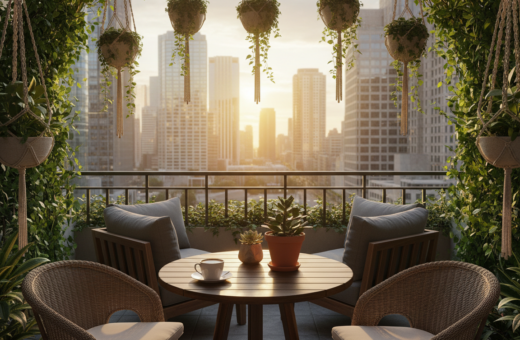
Stacking greenery vertically transforms a tight outdoor nook into a lush, layered retreat. For city apartments, drawing the eye upward is a smart way to add life without sacrificing valuable floor area. Vertical solutions keep the center clear for seating or movement.
Vertical Garden Walls
Hollis Loudon of Hollis Loudon Interiors recommends a vertical greenery wall as a graceful, space-saving choice for small balconies.
“A vertical greenery wall is a beautiful solution for small outdoor spaces,” says Hollis Loudon.
Vertical gardens add texture and depth while giving a sense of privacy without enclosing the area. You can hang potted plants on a wall-mounted grid or use pocket planters to build a lush screen.
- Installing a vertical garden wall saves floor space while increasing the number of plants.
- Hanging potted plants creates a rich backdrop that does not take up square footage.
- By drawing the eye upward, the small balcony feels taller and more open.
Creating Ambiance with Strategic Lighting
Thoughtful lighting transforms a tiny outdoor nook into a warm, usable retreat after sunset. A layered plan helps the space shift from daytime focus to relaxed evening mode.
Allison Garrison pairs an oversized natural pendant with delicate string lights to add depth and texture. This combo creates a lived-in feeling while keeping glare low.
If running power is limited, wrap string lights around a railing or use battery and solar fixtures. These options bring charm without rewiring or bulky cords.
- Layer lights: combine a pendant, task light, and soft string for better control.
- Adjustable options: dimmers or warm/cool bulbs let you change mood by the hour.
- Outlet-free fixes: battery or solar string lights brighten a railing without an electrician.
- Quality matters: aim for warm, flicker-free light to keep the space comfortable.
“Layering different types of lights makes a small outdoor area feel intentional and calm,” says Allison Garrison of Allito Spaces.
Choosing Cohesive Materials for a Curated Look
A unified material plan makes a small outdoor spot read like a single, polished room. Paulina Hospod of Aha!nteriors recommends picking a standard set of materials—wicker, teak, or stone—to link zones and avoid visual clutter.
Repeat, don’t mix randomly. Using the same materials across furniture, planters, and floor details creates a calm palette. Natural wood tones bring warmth and tie the exterior back to indoor finishes.
Designer-approved tip:
- Choose two to three primary materials and echo them across the space.
- Use wicker for texture and warmth while keeping other decor simple.
- Repeat a consistent color palette to make the area feel cohesive.
“Cohesion in materials helps a balcony feel curated rather than cluttered,” says Paulina Hospod.
Implementing Privacy Solutions for Focus
Privacy changes how a tiny balcony feels, turning it into a focused retreat for the day. Simple barriers help remote professionals concentrate without leaving the apartment.
Michelle Vassallo of MV Architects notes that a screened-in setup bridges indoor comfort and outdoor ambiance. A screen gives shade, reduces noise, and makes the space feel like an actual room.
A wood-clad ceiling and floor can double as a privacy feature while adding warmth to a minimalist apartment balcony. Natural materials also boost comfort and calm the eye.
Use tall plants, lattice panels, or fabric screens to make a quiet enclosure. These elements create visual separation and a sense of seclusion that supports long focus sessions.
- Make it private: screening provides seclusion without full enclosure.
- Add seating: a comfy chair or small bench turns the area into a usable room.
- Layer materials: wood and greenery create warmth and sound dampening.
“Screening in your balcony provides a versatile space that offers both comfort and seclusion,” says Michelle Vassallo.
Adding Personality with Bold Patterns and Tiles
Well-chosen tile can transform an ordinary floor into a curated canvas for plants and seating. Lisa Staton often uses small-scale tile to echo a black-and-white palette and add instant pattern.
Bold-patterned tile gives a tiny balcony a clear identity without crowding the space. Natural materials—marble, handmade clay, or encaustic tile—lift the look and age gracefully.
Pair a patterned floor with simple chairs and lush greenery to balance energy. A single feature wall or a graphic floor acts as a focal point, making the outdoor garden feel like a designed room.
- Add personality: patterned tile on the floor introduces color and rhythm.
- Use quality materials: marble or handmade tiles create a refined palette.
- Mix textures: soft plants and woven textiles play against a bold tile backdrop.
Designing for Different Times of Day
A simple shift in light and furniture can turn a compact urban nook from focused morning space into a cozy evening retreat.
Golden Hour Setup
Warm wood furniture and a low table make the most of late-afternoon sun. Lisa Staton suggests leaving one spot for a drink or book so the area stays functional as the light changes.
Pick natural tones and a small corner table to catch city views and the softer sun. Wicker seating and light textiles help the outdoor space feel like an extension of the living room.
Evening Ambiance
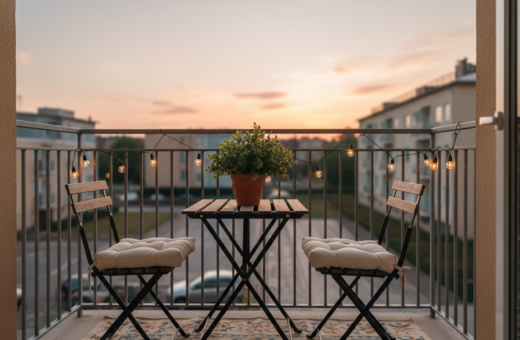
String lights are perfect for switching from spreadsheet mode to a relaxed evening vibe after sundown. Soft, warm lights keep glare low and add depth without extra wiring.
Plan a two-mode setup: brighter task light for daytime focus and warm string for night. This keeps the small space useful at any time.
- Design for morning, golden hour, and night so the area serves many needs.
- Place a small table in the corner to enjoy views and hold essentials.
- Choose one or two materials—wood and wicker—to keep the palette calm and cohesive.
Keeping Your Setup Minimalist and Functional
A tightly edited approach keeps a tiny outdoor nook calm and genuinely usable. Cynthia Masters of Panageries stresses that editing choices prevents overcrowding and keeps the area inviting.
Merge beauty and purpose by choosing a few well-made pieces. A simple table and one chair deliver both productivity and relaxation without cluttering the balcony space.
Limit furniture to essentials and pick multiuse items. A foldable table can hold a laptop or a cup, then tuck away to free room for movement and stretching.
Keep plants strategic so they add calm without blocking natural light. Thoughtful placement of greenery preserves sight lines and keeps the area bright.
“Edit often; remove what doesn’t add purpose,” says Cynthia Masters.
- Focus on a small number of things that support both focus and rest.
- Choose compact seating and a lightweight table to save floor area.
- Use natural light as the primary light source whenever possible.
Take the time to curate the setup so the small spaces feel open, tidy, and ready for daily use.
Avoiding Common Design Mistakes
Too many small pieces can overwhelm a compact outdoor nook and ruin its flow. Good design favors a few clear choices over many random objects.
Cynthia Masters warns that overcrowding a tiny space turns it into clutter. She recommends editing down to essentials so the area feels calm and usable.
Senalee Kapelevich of SVK Interior Design takes a different angle: fewer, larger pieces can simplify the layout and make the whole space look intentional. One well-sized sofa or bench can replace several tiny stools and still leave room to move.
Keep a single small table and one set of chairs to support a morning coffee or reading session. Consider traffic patterns so seating does not block the entry to the apartment balcony.
- Don’t cram too much furniture into a tight footprint.
- Choose larger, multipurpose pieces to reduce visual noise.
- Use smart decor to add personality without cluttering surfaces.
“Avoid filling the space for the sake of it; edit with purpose,” says Cynthia Masters.
Adapting Your Balcony for Seasonal Changes
A few strategic changes each season can extend use of a compact outdoor nook through cold and heat. Small swaps keep the area inviting no matter the month.
Start with textiles: Lisa Staton suggests sheepskins and warm throws to make seating cozier when the sun drops. Add a weather-resistant rug on the floor to hold heat and define the seating zone.
Choose plants that match your orientation and light. South- or west-facing spots suit sun-loving varieties; shady corners need tolerant foliage. Rotating pots refreshes the garden and reduces pest pressure.
Privacy and shelter matter as weather shifts. Bamboo shades or a removable screen protect from wind and harsh sun while preserving views. A simple wood windbreak near the railing helps block drafts without closing the space.
- Seasonal switch: swap cushions and color to reflect time and mood.
- Designer-approved way: layer textiles and move portable planters as light changes.
- Year-round use: pick one versatile table and foldable seating for flexible design.
“Adapting simple elements keeps a small outdoor area useful in every season.”
Conclusion
Turning a compact outdoor space into a cozy refuge rewards both focus and mental health.
Choose comfortable furniture, layered lighting, and a few well-placed plants to make the area inviting and practical. These simple moves help a small balcony feel like an intentional extension of the home.
Keep the layout minimal and flexible so the spot serves short pauses and longer stretches of concentration. Regular time spent outside helps prevent burnout and restores energy during the day.
With small, deliberate choices, anyone can craft a personalized retreat that supports productivity and calm. Use what fits the apartment and enjoy the benefits all year.