Small outdoor spaces can become a true extension of living when design matches scale and purpose.
Designers note that typical small balconies range from 24 to 60 square feet. That fact helps people pick furniture that fits and avoids clutter.
With simple ideas, even small areas can feel like curated rooms. Thoughtful layout, proper seating, and layered textures give a stronger sense of calm and usefulness.
Residents who treat a space as intentional gain sun, fresh air, and a spot to unwind. Professional tips focus on balance: functional storage, scaled furniture, and pleasing visuals.
Whether in a busy city or a quiet street, improving balcony feel comes down to planning. Clear sightlines and a few well-chosen pieces can make small balconies the best place in the home.
– Consider size first: 24–60 sq ft guides furniture choices.
– Treat the area as a room: prioritize comfort and harmony.
Treat Your Balcony as an Extension of Your Interior
A tiny outdoor area can read like a living room when its palette and scale match the interior.
Ashi Waliany of Cusp Interiors recommends using tones, textures, and silhouettes that complement the home. She anchored one outdoor space with a sculptural console layered with textural pottery to give the area weight and purpose.
“Mirror the colors and textures you use inside so the outside feels like part of the whole home.”
- Match key furniture pieces to indoor style to create a cohesive balcony look.
- Choose weathered finishes to add patina and bridge indoor and outdoor aesthetics.
- Mix shapes and scales so the balcony feel stays lively, not static.
- Pick every decor item in a way that respects the apartment’s interior design flow.
In this way, the small balcony becomes a true room. A consistent design approach stops the space from feeling like a storage spot and invites more time outdoors during warm weather.
Selecting the Right Furniture for a Calm Apartment Balcony
Smart furniture choices make a compact outdoor space feel roomy and purposeful. The goal is to add function without crowding the floor. Choose pieces that match scale and move easily when needed.
Bistro Sets
A bistro set pairs a small table with two chairs, which is ideal for morning coffee or a quick meal. It fits tiny balcony footprints and creates an instant focal point.
Pick slim legs and foldable designs to reclaim room when the set isn’t in use. A well-placed table can turn a neglected corner into a cozy dining or reading spot.
Multifunctional Benches
Multifunctional benches add seating while hiding storage beneath the lid. This type of furniture keeps the area tidy and extends usable surface area for plants or trays.
- Maximize seating without overwhelming the limited floor area.
- Choose slim-profile pieces to keep sightlines open and movement easy.
- Invest in quality so the small balcony remains a comfortable retreat for years.
When items serve more than one purpose, the space stays organized and inviting. Thoughtful selection preserves airflow, sightlines, and a relaxed feel in even the smallest outdoor spots.
Maximizing Comfort with Outdoor Rugs
A well-chosen outdoor rug anchors furniture and gives a compact space instant warmth and personality. Outdoor rug choices can turn a small balcony into a cozy room without heavy investment.
Designers use rugs to define the floor and set a clear seating spot. Caroline Kopp layered a blue rug with an interlocking geometric pattern to add visual energy. Cynthia Masters planned a seating layout for four to five people so traffic stays fluid and the spot feels open.
- Define the floor: an outdoor rug adds softness and marks a dedicated seating area.
- Make space intentional: a patterned rug ties cushions and plants into one cohesive look.
- Durability matters: pick weather-resistant fibers so the rug lasts through seasons.
As a simple way to upgrade an outdoor space, a rug creates a welcoming atmosphere. Pair it with flexible pieces like poufs to keep the area breathable and to make the balcony feel like a true retreat.
Creating Depth with Container Plants
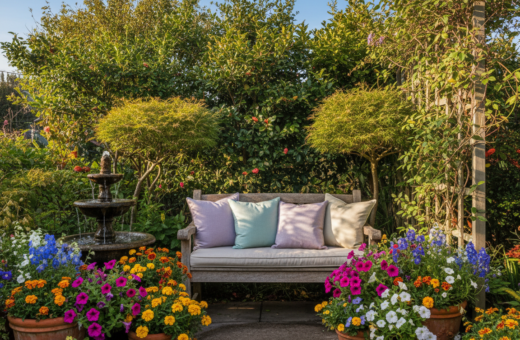
Stacking heights and textures with pots and planters helps a small balcony feel richer and more dimensional. This approach softens hard lines and gives the outdoor space a layered backdrop.
Varying Plant Heights
Sabra Ballon of BallonSTUDIO recommends placing tall potted plants in the back, mid-level planters at seat height, and low bowls on the floor. This simple placement builds depth and keeps sightlines open.
- Scale and texture: mix large, leafy specimens with fine, feathery foliage to add contrast.
- Use vertical shifts to draw the eye outward so the space reads larger than it is.
- Vary container finishes—new and antique—so the collection gains character and life.
“Position tall plants behind seating, mid-level pots near chairs, and low bowls on the ground to create a layered, lush effect.”
Container plants are more than decoration: they improve air quality and create a private green oasis. With considered placement, even a tight balcony becomes a vibrant, roomy retreat that boosts the overall balcony feel.
The Power of Vertical Gardening
A vertical garden turns unused wall space into a lush, living screen that lifts the whole outdoor feel. Hollis Loudon of Hollis Loudon Interiors recommends this approach for small balconies that lack floor space. It draws the eye up and adds privacy without making the area feel boxed in.
Why it works: using wall-mounted planters or pocket systems lets one pack more plants into a tight corner while keeping floor traffic free. Vertical greenery adds softness and texture and creates a living privacy screen that shields neighbors.
- Space-efficient: the wall becomes the garden, saving floor space for seating or storage.
- Visual lift: upward lines make small balconies feel taller and airier.
- Privacy: trailing plants and dense foliage form a natural screen.
- Versatile ideas: mix herbs, trailing vines, and leafy greens for variety and resilience.
“Positioning plants vertically transforms an overlooked corner into an intentional, lush retreat.”
Tip: choose lightweight systems and modular planters so the garden can evolve. Even the smallest corner can deliver greenery, privacy, and the fresh energy that makes the outdoor space worth using.
Softening the Space with Textiles
Textiles bring personality and comfort, making a compact space feel like a deliberate extension of the home. Lisa Staton of Lisa Staton Interior Design recommends adding sheepskins, rugs, and layered fabrics to warm an outdoor spot.
Weather Resistant Cushions
Weather-resistant cushions are essential for outdoor living. They offer comfort while standing up to sun, rain, and frequent use.
Choose quality materials with UV and water protection so the cushions last. By adding soft cushions, simple seating becomes a luxurious retreat for reading or relaxing.
Layering Throws
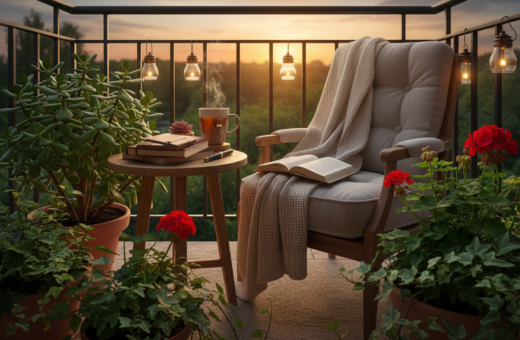
Layering throws extends time outside as temperatures fall. Lightweight blankets tuck over chairs or benches and add visual depth.
Mix fabrics—linen, cotton blends, and short-pile faux sheepskin—to create contrast and a lived-in feel. Textiles soften hard lines and make the space read like indoor living.
- Use durable cushions to reduce upkeep.
- Layer throws for warmth and texture.
- Don’t be afraid to mix patterns and solids for a curated look.
“Textiles are the best way to create a restful, cozy moment on your balcony.”
Setting the Mood with Thoughtful Lighting
Warm, layered lighting turns a small outdoor spot into an inviting night retreat.
Allison Garrison of Allito Spaces pairs an oversized natural pendant with delicate string lights to create a cozy, lived-in feel. That mix adds structure and softness at once.
String lights are an easy win for an apartment balcony. Draped along railings they give a gentle glow that feels romantic without glare.
Layering matters: add a pendant or a task lamp for reading, then use string or solar lights to wash the space in warmth. Lighting also highlights plants and decor so the area looks intentional after dark.
- Use battery or solar-powered lights if outlets are limited.
- Mix overhead and accent lights for balanced atmosphere.
- Choose warm bulbs to enhance the overall balcony feel.
“Mixing structure and softness with lighting makes a small outdoor space feel like a private escape.”
Incorporating Natural Elements for Serenity
Layering wood, stone, and living herbs gives a tiny exterior space a grounded, intentional feel. Natural textures break up hard surfaces and make the area feel more organic.
Herb Garden Integration
An herb garden is a practical way to add greenery while supplying fresh ingredients for cooking. Mint, basil, and rosemary thrive in small pots and fill the air with scent.
Use a railing planter or a narrow shelf to save floor room. Tall, leafy plants can create a natural screen that boosts privacy and softens metal or concrete finishes.
- Mix pebbles and reclaimed wood for texture and drainage.
- Choose shallow pots for herbs, deeper ones for screening plants.
- Keep a small watering routine to maintain vigor and fragrance.
“Natural elements help balance urban life by creating a little green refuge right outside the door.”
Tip: arranging materials and plants with intent turns a limited space into a peaceful, useful retreat that improves mood and invites more outdoor time.
Using Privacy Screens to Define Your Retreat
Privacy screens define edges so an outdoor space reads as an intentional retreat instead of leftover storage.
Michelle Vassallo of MV Architects calls a screened-in balcony a cozy oasis that bridges indoor and outdoor living. She notes that screens give a clear sense of privacy while keeping the area bright and inviting.
Even small spaces gain a sense of enclosure without feeling boxed in. Use bamboo panels, durable fabric, or a row of tall plants to form a soft visual barrier. A well-placed screen can also block wind or harsh sun so the area is usable through more seasons.
Liz Williams of Liz Williams Interiors suggests anchoring a corner with a sectional to define seating and maximize room for guests. Together, screens and a corner sectional create a private scene that improves the overall balcony feel.
- Privacy adds comfort and makes the space feel intentional.
- Screens suit any apartment style—choose material to match.
- Defined edges encourage more time spent outdoors.
Choosing Low Profile Pieces for Open Sight Lines
Low-profile furniture keeps sight lines clear so a small balcony feels open and intentional. Picking low-slung pieces helps the view remain the focal point instead of bulky shapes.
How to arrange low pieces for maximum effect
Andrea Lackie suggests nesting furniture into the architecture to create a built-in look. Placing a slim sofa or bench in a corner saves floor room and gives the space a polished, integrated feel.
Senalee Kapelevich recommends using larger, low-profile pieces when possible. A weather-resistant sofa or sectional can simplify a small outdoor layout and increase usable seating.
- Keep lines low: short backs and slim legs preserve sight lines and keep the area airy.
- Use corners: tuck long benches into a corner to make the most of available floor space.
- Limit pieces: fewer, well-sized items reduce visual clutter and make small balconies feel cohesive.
“Clean lines and low profiles minimize visual clutter, letting patterns and color stand out.”
By focusing on scale and proportion when choosing furniture pieces, designers help these compact spaces stay functional and balanced. This approach keeps seating comfortable without sacrificing the airy feel that makes outdoor living enjoyable.
The Benefits of Collapsible Furniture
Folding furniture turns limited floor area into a flexible stage for daily life. It helps residents change how they use a small balcony without heavy lifting or long setups.
Collapsible pieces let you reclaim floor space fast. A fold-down table or stackable chairs can be tucked away so the area becomes open for yoga, kids, or stargazing.
These items are ideal for an apartment where every inch must work. High-quality folding chairs offer comfortable seating without sacrificing style.
- Folding tables provide a temporary surface for work or meals.
- Stowable chairs free up room for guests or activities.
- Many styles exist, so function and aesthetics can coexist.
- Compact pieces help organize and keep the space tidy.
“Choose durable collapsible furniture and the area easily adapts to daily needs.”
With the right folding table and chairs, a small balcony becomes a multi-functional spot that can host meals, work sessions, or quiet time—and then disappear when not needed.
Adding Visual Interest with Patterned Tile
Introduce patterned tile and the floor becomes the anchor that pulls every element together.
Lisa Staton of Lisa Staton Interior Design favors small-scale, black-and-white patterns that contrast simple pillows and furniture. Using a bold tile is an easy way to add texture and color without crowding the space.
She recommends natural materials—marble or handmade tiles—over synthetic choices for an authentic, high-end look. A patterned surface ties seating, a table, and planters into one cohesive design.
Durable, weather-resistant tile keeps the area beautiful and low maintenance. Even a tiny outdoor spot gains a professionally styled feel when the floor reads intentional and rich in detail.
“Patterned tile can turn the floor into the focal point, making a small outdoor area feel like a finished room.”
- Design impact: anchors the whole space.
- Material: choose real stone or handmade options.
- Practical: pick weatherproof tiles for long life.
Creating a Cohesive Material Palette
A unified set of materials turns a small outdoor space into a polished, intentional room.
Paulina Hospod of Aha!nteriors recommends sticking to a short list of finishes—wicker, teak, and stone—to link dining and seating zones. Repeating these materials keeps the area from feeling cluttered.
She also favors repetition and contrast. For example, repeated matte black planters can ground vivid flowers and make the design read as one whole.
Use warm wood tones to tie the outdoor room back to interior design choices. Matching a teak table with slim teak chairs creates a seamless transition between inside and out.
- Unify materials: choose two or three main finishes for furniture and accents.
- Repeat elements: a single planter finish or metal tone links zones visually.
- Use contrast: dark planters or stone detail highlight favorite flowers and decor.
Keeping materials consistent makes the balcony feel curated and functional. For more practical ideas on fitting style to tight footprints, see small balcony ideas.
Result: a thoughtful material palette produces a refined balcony feel that reflects personal style and improves how the space functions every day.
Utilizing Hanging Decor to Save Floor Space
Raising planters and lanterns off the ground frees up floor real estate and gives a compact spot an instant lift.
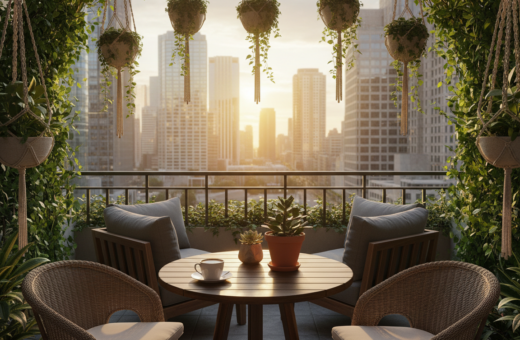
Hanging decor is a simple, high-impact way to add greenery without crowding the floor. Use ceiling hooks to suspend planters, string lights, or small lanterns so the space stays open for seating and movement.
For an apartment balcony, hanging planters let one layer color and texture vertically. Choose trailing petunias or begonias to add blooms that cascade without taking up floor space. This also improves airflow and cuts pest buildup around ground pots.
- Maximize vertical greenery: mix hooks and rail-mounted hangers to cover different heights.
- Keep the floor clear: reserve ground room for seating or a small table.
- Switch looks easily: swap plants or ornaments seasonally for fresh style.
“Hanging pieces draw the eye up, creating a lush, layered feel while protecting usable floor for daily life.”
Used well, hanging decor stretches every inch of a small balcony. It’s a flexible design move that boosts greenery, airflow, and the sense of open space without heavy installs.
Avoiding Common Clutter Mistakes
Editing choices matter: a pared-down layout lets a tiny space breathe. When people try to fill every inch, the spot stops working as a restful room.
Designers say the biggest error is failing to edit furniture and decor. Too many chairs, a large table, and extra pots block movement and ruin the atmosphere.
“Cynthia Masters of Panageries says the key to a small balcony is knowing when to edit to avoid overcrowding.”
Quick fixes that help make space for relaxation:
- Pick two quality pieces: one seating item and one table to define the room.
- Limit plants: keep tall pots to the wall and group smaller flowers in a single tray.
- Clear the floor: store gear off the ground so floor space stays open.
- Smart lighting: use string lights or a single lamp to add atmosphere without clutter.
By editing with intent, even small balconies can feel spacious, private, and useful year-round. Remove what doesn’t serve comfort or style and the garden retreat will come to life.
Conclusion
A well-edited outdoor spot can change how a person lives at home, turning unused space into daily pleasure.
Focus on function: remove clutter, pick a few quality pieces, and add greenery to frame the area. Good planning makes even a tiny balcony feel purposeful and inviting.
Layer textiles like throws and cushions for comfort and add warm lighting so the space works day and night. Proper lights and soft fabrics set mood and extend use into the evening.
With simple edits and intentional choices, the space becomes a true retreat that improves daily life. Start small, edit often, and let the area grow into a favorite place to relax and recharge.