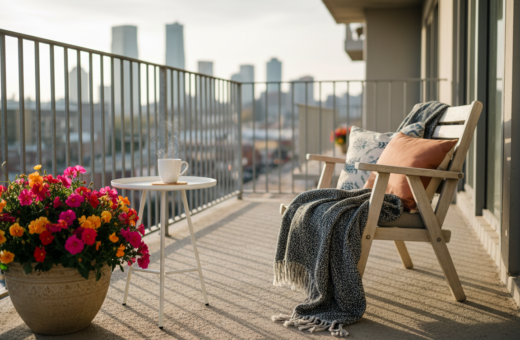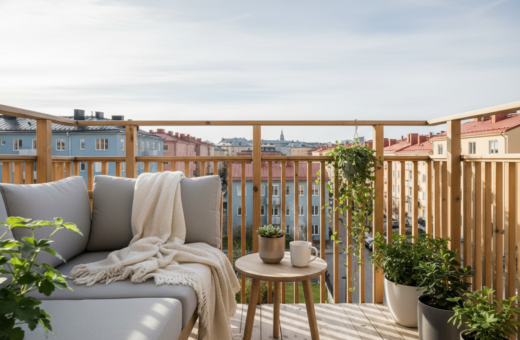
Many city apartments have balconies of just 50 to 60 square feet. Those compact outdoor spaces often feel too small to use, so residents leave them empty. That is a missed chance to get fresh air and enjoy the sun.
Decorating a small apartment balcony requires planning. Designers advise choosing a few smart pieces and avoiding an overcrowded table and too many chairs. When done right, the apartment balcony becomes a calm retreat where one can read or sip coffee.
Practical tips focus on scale and function. Select items that match the interior style and serve real purpose. With careful choices, even a small apartment balcony can feel open, stylish, and inviting.
Treating Your Balcony as an Extension of the Home
Think of your small balcony as another room that should speak the same visual language as your interior. San Francisco-based designer Ashi Waliany recommends matching tones, textures, and silhouettes to make the outdoor space feel deliberate.
Use a unified color palette that mirrors the apartment’s main hues. That simple step helps the apartment balcony read like a planned living area rather than an afterthought.
Layering matters. Waliany anchored a terrace with a sculptural console and textural pottery to add soul. Weathered finishes introduce patina that feels collected, not cluttered.
- Match interior silhouettes to create flow.
- Mix shapes and scales to keep the look dynamic.
- Choose weathered materials for instant character.
Design with intention: when the style aligns inside and out, guests and residents experience a seamless transition that enlarges the perceived living area.
Essential Strategies for Tiny Balcony Decor
A purposeful plan makes a small outdoor area feel calm and usable. Cynthia Masters of Panageries notes the aim is an open, breathable setting. Start by choosing one or two uses—reading, plants, or a morning coffee spot—and edit items that don’t support them.
Avoiding Overcrowding
Limit furniture and plants to what the space needs. Prioritize seating that supports relaxed conversation for four to five people but keeps circulation clear. When selecting a table and chairs, match the scale to the footprint so the area feels open.
Maintaining Sight Lines
Low-profile furniture preserves views and prevents the area from feeling overwhelmed. Andrea Lackie recommends pieces with slim legs and low backs to keep sight lines intact. Add a vertical garden or hanging plants to bring green without sacrificing floor room.
- Cynthia Masters: edit furniture and plants regularly.
- Prioritize seating and a compact table for usability.
- Use vertical plant solutions to save floor space.
“Keep the layout lean: balance beauty and purpose to create a serene, curated retreat.”
Selecting Furniture That Fits Your Footprint
Let the architecture guide furniture choices so each piece feels built-in and balanced. Andrea Lackie advises choosing outdoor furniture that nestles into the structure to create a custom feel. This approach reduces visual clutter and makes the area feel integrated with the home.
Liz Williams suggests anchoring a corner with a weatherproof sectional to maximize seating on a small balcony. A corner sectional frees up floor room and creates a clear lounging zone that reads as intentional.
Select a compact table and narrow chairs that match the footprint. Picking the right table and chairs keeps the patio functional without overwhelming the view.
- Prioritize pieces that fit the current space to preserve circulation.
- Choose modular seating to adapt arrangements for guests.
- Opt for weatherproof materials to extend lifespan and ease maintenance.
“Pick furniture that belongs to the architecture — it turns a small balcony into a comfortable, usable room.”
Maximizing Comfort with Outdoor Textiles
Well-chosen textiles add warmth and purpose to outdoor seating. They make a small balcony feel like an intentional room instead of an afterthought.
Lisa Staton of Lisa Staton Interior Design emphasizes that sheepskins and durable rugs bring instant warmth and texture. These pieces create a softer surface underfoot and help the space feel inviting year-round.
Layering Pillows and Blankets
Layering pillows and blankets is an easy way to boost comfort without crowding the footprint. Outdoor pillows add color and support for seating while resisting mildew and fading.
Lightweight blankets tuck into a storage bench or basket and are perfect for cool summer evenings. Because they fold small, they suit a compact area and expand use into later hours.
Tip: combine one patterned pillow with a solid and a sheepskin for contrast. For more ideas on arranging textiles and furniture, see this patio and balcony tips.
“Bring soft layers outside to make the area feel lived-in and ready for relaxation.”
Creating Visual Depth with Container Plants
Layered containers and thoughtful plant placement turn a compact balcony into a composed green room. Sabra Ballon of BallonSTUDIO recommends grouping pots by height and finish to build visual depth without crowding the floor.
Position tall potted plants in architectural containers at the back to lift the eye and add structure. Then place low bowls of plants on the floor so greenery reads well from above and from inside the apartment.
Use a variation of complementary container finishes to add contrast. Mix matte ceramics, woven fiber, and metal to create layers that feel intentional.
- Pair large-leaf plants with fine-textured foliage for balance.
- Keep taller pieces at the rear to preserve circulation.
- Place low bowls near seating to soften edges without blocking movement.
“Incorporating plants of varied scale and texture makes a small balcony feel lush and deliberate.”
Using Rugs to Define Your Outdoor Living Area
Placing a rug can visually anchor furniture and make the outdoor area read as a true room. Caroline Kopp of Caroline Kopp Interior Design used a blue rug with an interlocking geometric pattern to finish a small balcony and tie the scheme together.
A rug is an easy way to make the balcony feel like an extension of the living room. It conceals an uneven floor and adds comfort underfoot, so bare feet enjoy the patio more.
- Define the space: a rug creates a visual border that groups seating and plants.
- Add personality: bold patterns become a focal point and set the tone.
- Stay practical: choose durable, weather-resistant materials for long life.
“An outdoor rug gives a small balcony a finished, comfortable appearance.” — Caroline Kopp
Incorporating Vertical Elements for Privacy
Raising greenery upward gives a small outdoor area instant seclusion and texture. This approach keeps the floor clear while creating a green backdrop that feels intentional and calm.
Installing vertical gardens is a practical way to add a living screen. Hollis Loudon of Hollis Loudon Interiors notes a vertical greenery wall offers privacy without closing in the space.
“A vertical greenery wall offers privacy without closing in the space.”
Installing Vertical Gardens
Use modular panels or pocket systems on a wall to layer herbs, vines, or compact shrubs. A planted wall draws the eye up and adds softness to the home exterior.
Using Hanging Planters
Attach planters to a railing to free the floor and keep circulation open. Hanging pots are a smart way to bring more plants into a small balcony without crowding the footprint.
- Vertical gardens add texture and boost privacy.
- Hanging planters save floor space and suit many layouts.
- Use a mix of trailing and upright plants for depth.
Tip: position taller elements at the back and hanging pots at eye level to keep the area feeling open. This is an easy way to make a compact outdoor space feel like a private, layered retreat.
Lighting Techniques to Set the Mood
Good lighting extends the hours you can enjoy an outdoor spot and refines its atmosphere.
Designer Laureen Brive shows how a string lights wrap around a railing can create an immediate, cozy glow. That simple move turns a narrow balcony into a welcoming evening retreat.
Choose adjustable fixtures so you can set light levels for reading, dining, or relaxing. Dimmers and remote controls make the area flexible for every mood.
- Use solar or battery-powered options when outlets are unavailable.
- Add a portable table lamp to make the seating area usable after dark.
- Layer uplights, task lamps, and accent strands to define the space and boost ambiance.
“Thoughtful lighting helps a small outdoor area feel safe, intimate, and deliberately planned.”
Choosing Cohesive Materials to Reduce Clutter
A measured material palette helps different zones feel connected rather than competing.
Paulina Hospod of Aha!nteriors recommends committing to a small set of materials—wicker, teak, or stone—to unite seating, a dining table, and planting areas. Repeating one or two finishes makes the apartment balcony read as curated, not crowded.
Use contrast and repetition to anchor the design. Matte black planters, for example, can ground a light wood table and tie the outdoor look back to interior finishes.
- Pick furniture pieces that share texture or color to streamline the look.
- Repeat materials between seating and the dining area to connect zones.
- Limit bold accents so the space stays calm and intentional.
“A consistent material story makes small balconies feel purposeful and polished.”
These practical tips help reduce visual clutter and make a compact outdoor area feel thoughtful. The result is a balanced look that supports both use and style.
Installing Functional Flooring Solutions
Flooring sets the foundation for a pleasant outdoor living area and guides how the space is used. Landscape architect Keith Williams and Kemble Interiors suggest lining a balcony surface with turf to create a lush, soft foundation that reads like an extension of the living room.
Replacing shabby floor treatments with fresh tiles or wooden planks can turn a patio into a striking design statement. Choose materials that stay weatherproof and non-slip to protect feet and furniture.
- Turf: adds cushion and a green, garden-like feel underfoot.
- Tiles or planks: elevate the look and are easy to clean.
- Safety checks: always confirm load-bearing limits before heavy installs.
- Complement with plants: position pots near the railing to blend the new surface with greenery.
- Sun use: pick materials that resist fading and heat buildup.
A soft floor covering encourages people to use the space more often and makes the outdoor area feel like a true room that invites lounging and fresh-air moments.
Utilizing Collapsible Furniture for Flexibility
Portable tables and chairs make it simple to change a balcony from guest-ready to free floor space. These foldaway pieces remove barriers to movement and let residents switch functions quickly.
Folding furniture is ideal when a small balcony must serve many roles. One minute it supports breakfast; the next it is stowed for yoga or drying clothes.
Choose lightweight, weatherproof pieces that fold flat and slip into storage. That keeps the space airy and easy to maintain.
- Pick a compact table and two folding chairs to host a casual meal.
- Stow the chairs on a hook or in a closet when floor room is needed.
- Look for multiuse pieces that move easily and last season after season.
By prioritizing collapsible furniture, people can adapt their small balcony to changing needs without sacrificing style or function. The result is a flexible outdoor area that balances form and everyday use.
Adding Decorative Art and Wall Accents
Hanging a few well-chosen pieces transforms a bare wall into a focal point that reads like an extra room.
Personal touches—a framed print, weatherproof sign, or sculptural wall planter—make the balcony feel like an intentional extension of the home. These accents add personality while leaving floor space free for seating and plants.
Install a planter’s box on the wall to combine function and form. It gives a neat, space-saving garden and a living artwork that changes through the seasons.
- Use a small gallery of outdoor-safe art to set the design and style.
- Mount a planter box to introduce texture and greenery without sacrificing floor room.
- Add string lights or other lights to highlight accents and extend evening use.
Tip: treat the wall like an interior surface—repeat colors and materials from inside to create cohesion. These decorating ideas show how vertical surfaces can give a compact space character without clutter.
Implementing Smart Storage with Bar Carts
A compact, rolling bar cart instantly adds storage and service to an outdoor spot.
Use a bar cart to keep glassware, mixers, and serving tools tidy. A slim cart fits against a wall so the seating area stays clear.
Designer Ashley Gilbreath favors a wheeled cart for easy transport of drinks from kitchen to patio. Wheels let hosts move supplies without disrupting guests.
- Choose a narrow bar cart for a small apartment balcony to save floor room.
- Pick weatherproof finishes so the furniture lasts outdoors.
- Use the top for service and lower shelves for storage to keep the area organized.
- Wheel the cart to the center when entertaining, then tuck it back against the wall.
“A bar cart with wheels makes moving cocktails and glasses outside effortless.” — Ashley Gilbreath
Result: a defined spot that improves function and keeps your apartment balcony tidy while boosting patio entertaining options.
Considering Screened Enclosures for Year-Round Use
A screened enclosure can turn an overlooked outdoor nook into a usable room all year. Michelle Vassallo of MV Architects designed a screened-in balcony to bridge indoor comfort and outdoor ambiance. Her approach makes the apartment feel larger and more functional.
Screening in a balcony is a practical way to keep bugs away and extend the time you can use the space. It also protects furniture and textiles from wind and rain so pieces last longer.
These enclosures add privacy without closing the view. With thoughtful panels or mesh, the area reads as a cozy, secure living spot that connects to the home.
- Creates an all-season living area for morning coffee or evening reading.
- Shields furnishings to reduce maintenance and replace cycles.
- Boosts privacy while preserving light and airflow.
“A screened-in balcony bridges indoor comfort and outdoor ambiance.”
Incorporating these ideas can transform an overlooked balcony into a functional room you enjoy every year. Designers recommend planning materials and vents so the enclosure works through all seasons.
Balancing Scale with Larger Statement Pieces
Choosing one bold, well-scaled piece can transform a compact outdoor area into a cohesive seating zone.
Senalee Kapelevich of SVK Interior Design recommends leaning into larger pieces of outdoor furniture to simplify the space and maximize seating. A single sofa or broad bench reduces the need for multiple small chairs and keeps circulation clear.
Alexis Vitale suggests embracing oversized chairs and plush pillows to create a cozy home feel. Oversized seating invites longer stays and reads as intentional rather than overcrowded.
- Anchor the plan with one statement sofa or two large chairs to make the patio look composed.
- Use neutral finishes so the larger piece ties to the apartment’s overall style.
- Place plants near the railing to soften scale and add a green frame.
“A single, well-chosen piece makes a small balcony feel put together and comfortable.”
Tip: pick weatherproof fabrics and compact shapes so a large item serves for years and keeps the balcony space inviting all season long.
Conclusion
A few careful choices can turn a compact outdoor spot into a practical, stylish retreat. Use these balcony ideas to guide furniture, plants, and lighting so the space feels planned and open.
Focus on comfortable seating, smart storage, and layered decor to make the area read like an extension of the home. Small adjustments—like adding string lights or a vertical planter—extend use through the year.
These tips and ideas keep circulation clear and boost function. When design decisions reflect how people will use the space, the result is a calm, usable living spot that invites daily enjoyment.