Max Khusid, who runs Art House SF, spent five years refining methods that help city dwellers grow food in tight outdoor spots. His approach showed that even a small balcony garden can supply fresh ingredients across the year. This guide explains practical steps to make that work in an urban home.
By choosing high-yield plants and smart containers, gardeners can turn limited space into a reliable source of produce. Max emphasizes planning for microclimates and picking varieties that fit your routine.
Every harvest matters. Growing your own veggies reduces waste and builds a steady supply of organic food. The tips that follow are meant for beginners and pros alike who want a productive setup that fits their existing layout.
Assessing Your Balcony Growing Conditions
Map the light and breeze across the space before choosing pots or planting any seedlings. A quick, repeated check over a few days shows when direct sun or persistent shade appears. That pattern will determine which plants and varieties belong where.
Sunlight and Shade Patterns
Track light at morning, midday, and late day. North-facing exposures in many San Francisco locations give steady, cooler light. Warm pockets exist in parts of the Bay Area, including USDA Hardiness Zone 10b in southeast San Francisco. Use that info to pick heat- or cool-loving fruit and herbs.
Wind Protection Strategies
Wind can dry soil and harm stems. Heavier pots like terracotta add stability. Temporary screens or windbreaks protect tender plants and limit moisture loss. Check the space at different times to see how wind and light interact.
- Weigh containers and anchor tall supports.
- Adjust placement to match sun, shade, and watering needs.
- Consult a short guide to vertical options for tight spaces: vertical gardening tips.
Consistent monitoring of these conditions lets gardeners adapt pot choice, watering schedule, and plant placement for reliable results. For layout examples and container ideas, see a short reference here: sample setup.
Designing Your Balcony Vegetable Garden Layout
Maximizing vertical and horizontal zones turns tight outdoor areas into steady suppliers of herbs and greens.
Start with a sketch. Note where the sun falls and where shade holds most of the day. This simple map guides planting and placement of containers to match light needs.
Group plants by water and sun requirements. Placing sun‑lovers together and shade‑tolerant crops in cooler corners cuts maintenance time and improves yields.
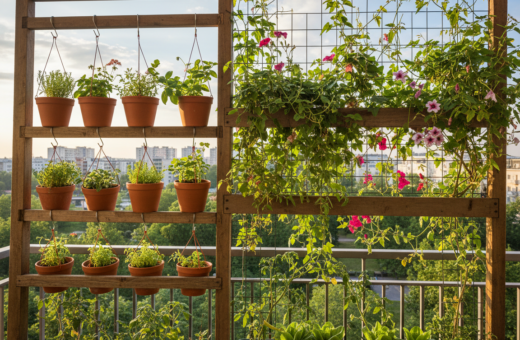
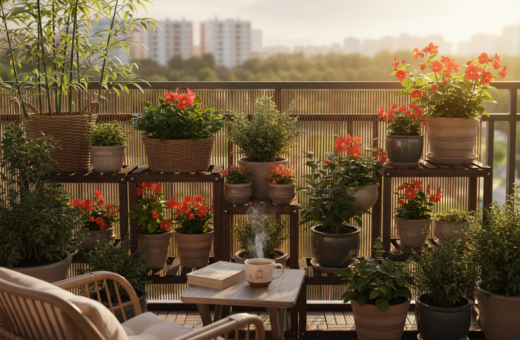
Think layers: tiered stands, wall shelves, and rail trellises expand usable area without crowding the floor. Hanging pots free ground room for larger containers.
“Use vertical supports and stackable planters to multiply planting options in a compact footprint.”
- Sketch the space and mark sunlight vs. shade.
- Group plants with similar needs for easier care.
- Prioritize access for daily harvesting and routine checks.
Good planning makes the setup both useful and welcoming. With the right layout, a small balcony vegetable garden can supply fresh ingredients and a pleasant retreat.
Selecting the Right Containers and Planters
The success of small-space plantings starts with selecting containers that match each crop’s needs. Material, size, and type directly affect roots, water retention, and overall plant health.
Material Considerations
Terracotta offers stability and breathability, which helps prevent soggy roots in windy spots. Plastic pots stay light and make repositioning easier when sunlight shifts.
Match material to plant needs: heavier pots for fruit-bearing plants and lighter pots for herbs and leafy greens that need frequent moves.
Drainage Requirements
Every container must have holes to stop water from pooling at the roots. Standing water invites fungal disease and root rot.
- Use saucers or trays under pots to protect the deck and neighbors below.
- For deep containers, layer coarse material at the base only if drainage is otherwise restricted.
Weight Management
Consider the combined weight of pot, potting mix, and water before filling. Large tomatoes and other heavy varieties need deep, robust containers but can overload a small rail or floor.
- Prefer railing planters and hanging pots for herbs and leaves to save floor space.
- Use rolling plant caddies or lightweight plastic for ease of movement and maintenance.
- When in doubt, consult a structural limit and choose containers that balance stability with manageable weight.
For a practical guide to container options and the best sizes for common crops, see a short resource on best pots for vegetables.
Choosing Premium Potting Mixes for Success
Start success at the root: pick a premium potting mix that balances nutrients and drainage for steady results in a small garden.
High-quality potting soil gives plants structure, air, and moisture retention. That foundation matters most on a sunny balcony where pots dry faster.
Max Khusid recommends water-soluble 24-8-16 Miracle-Gro for leafy greens and 18-18-21 for tomatoes to keep nutrient delivery consistent. Add Garden Lime when mixes include acidic ingredients like peat or compost to stabilize pH.
Look for mixes with wetting agents so the medium holds water evenly across containers and planters. Organic blends work, but they release nutrients more slowly than synthetic options.
- Choose a lightweight, well-draining potting mix for deep-rooted fruits and heavy pots.
- Use water-soluble feedings for fast-growing leaves and blooms.
- Test and adjust pH with lime to prevent disorders like blossom end rot.
Good soil management and regular monitoring of nutrients and conditions help diverse varieties stay productive through the season.
Essential Plants for Daily Harvests
Prioritizing quick-growing greens and compact herbs makes daily harvesting realistic even in tight spots. Choosing the right plants and timing their planting keeps the kitchen stocked with fresh leaves and flavor.
Selecting Leafy Greens and Herbs
Fast, reliable choices include Swiss chard and Red Russian kale. These varieties produce new leaves quickly and can be harvested repeatedly through the year.
Lettuce and mustard greens offer quick cycles and high volume. They fill salad bowls fast and tolerate partial shade.
Herbs to prioritize are mint, dill, and cilantro. They thrive in containers and give intense flavor with minimal space. Grow herbs near the kitchen for easy snips.
For fruiting crops, an indeterminate tomato plant delivers steady tomatoes for months in the right sun and microclimate. Use deep pots and steady water to support prolonged growth.
- Stagger planting times to spread harvests across the season.
- Group plants by sun and water needs to simplify care.
- Pick varieties you enjoy eating to keep the project rewarding.
Small choices make big returns: select compact, high-yield plants and manage planting intervals to maintain a daily supply of fresh produce.
Starting Seeds Indoors for Better Growth
Indoor seed starting lets gardeners raise many varieties at once, improving selection and timing for outdoor pots.
Max Khusid now uses Epic Garden seed trays to start up to 240 plants at a time. The trays give extra depth for healthy root development and save space in a small home setup.
Use a dedicated seed starting mix. It’s free of weed seeds and pathogens. Avoid regular garden soil: it’s heavy and can carry diseases that harm delicate seedlings.
- Water gently: bottom-water trays to keep soil moist without disturbing roots.
- Control light and temperature: steady sun or grow lights and warmth make seedlings stocky and strong.
- Harden off gradually: move plants outside in stages to prevent transplant shock.
Starting seeds indoors saves time later and lets growers choose rare varieties and fruiting or leafy types that suit their pots and sun exposure. Proper care in this phase pays off at planting time.
Implementing Efficient Watering Systems
A tailored watering setup makes small-space growing manageable and keeps varieties producing through the year.
Efficient irrigation saves time and keeps soil moisture steady in pots and planters. It also lowers disease risk by delivering water at the soil level instead of wetting leaves.
Drip Irrigation Benefits
Max Khusid built a custom drip system using Drip Depot parts. He runs a 1/2-inch main line with 1/4-inch drip lines to feed 14 planters evenly.
Automation with a timer ensures consistent delivery even when schedules change. Drip lines cut water waste and support steady root growth for herbs, tomatoes, and leafy plants.
Manual Watering Best Practices
When hand-watering, check pots daily. Containers dry faster than ground beds and need prompt attention in sun and wind.
Always confirm drainage holes are clear. Pooling water harms roots and can damage decking below. Whether automated or by hand, keep the soil uniformly moist for best yields.
“Consistent moisture is the simplest path to productive containers and fewer pests.”
Managing Soil Nutrients and pH Balance
C) A regular testing routine saves time and protects crops like tomato from disorders tied to poor soil balance.
Test soil regularly. Plants in pots used up minerals fast, so a simple kit or lab test every few months helps prevent deficiencies.
Garden Lime offsets acidity that peat moss and compost can add. Mixing lime into the potting medium reduced blossom end rot risk on tomatoes and kept fruit set steady.
- Use slow-release organics for steady feed, or water-soluble fertilizers for fast correction.
- Keep an eye on yellowing leaves or stunted growth — those are common nutrient signals.
- Match feeding to the plant stage for best growth and yield.
Consistent watering complements nutrient work. Uneven moisture often blocks uptake and causes disorders even when soil has enough minerals.
“Proper nutrient management separates a struggling plot from a truly productive urban space.”
Creative Vertical Gardening Solutions
Smart vertical layouts let growers multiply harvests without expanding their footprint. Vertical methods make the most of railings, walls, and narrow shelves so plants get light and air while the floor stays clear.
Utilizing Railings and Walls
Railing pots that hook over edges turn rails into productive edges for herbs, small tomatoes, and quick greens. They camouflage structure and add usable planting surface.
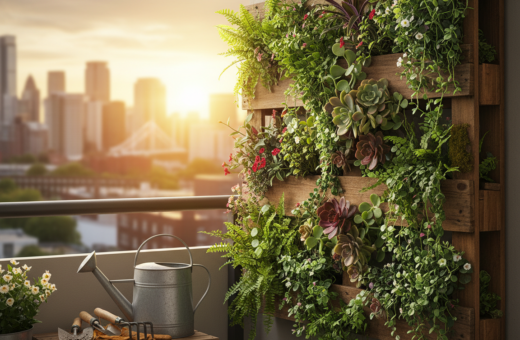
Install sturdy hooks or brackets to build a wall of produce. Hanging planters and mounted containers let gardeners stack layers of leaves and fruit without losing walking room.
- Safety first: anchor fixtures securely and check fastenings before wind events.
- Use tiered stands or stackable planters to create vertical layers for varied crops.
- Vertical setups improve air flow around pots and stems, helping prevent disease.
Well-planned vertical systems are a practical way to boost yields of tomatoes, herbs, and other plants. With secure fixtures and smart placement in sun, a small balcony garden becomes a lush, productive kitchen resource.
Troubleshooting Common Balcony Garden Issues
Small-space growers often face predictable problems that can be fixed with quick checks and simple changes.
If pots show water pooling, make sure drainage holes are clear. Standing water causes root rot and stunts growth.
When plants wilt despite watering, test soil moisture at root level. Containers on an exposed balcony dry fast and need frequent checks.
Pests spread quickly in tight planters. Monitor leaves daily and use neem oil, insecticidal soap, or hand removal to stop outbreaks early.
- Drainage: punch holes or raise pots on feet to improve flow.
- Variety fit: choose types that match sun, wind, and size limits.
- Spacing: avoid overcrowding; allow airflow to reduce disease.
- Fertilizer care: renters should avoid excess runoff that can stain patios or drip below.
Act quickly. Small interventions—better drainage, swapping a tomato variety, or thinning crowded pots—restore health and keep the space productive year-round.
Conclusion
Consistent routines and smart tools turn limited outdoor areas into dependable food sources.
Creating a thriving balcony vegetable garden is a rewarding journey that yields fresh veggies and fruit for the home. Simple choices—right containers, quality soil, and steady watering—make big differences across the year.
Maximizing available space takes planning and patience. Gardeners learn by doing, adjust methods, and try new ideas to fit their unique plot.
Start small, keep notes, and build on successes. With these tips, a balcony garden can become a productive, beautiful spot that supports daily cooking and a more sustainable lifestyle. Thank you for joining this guide.