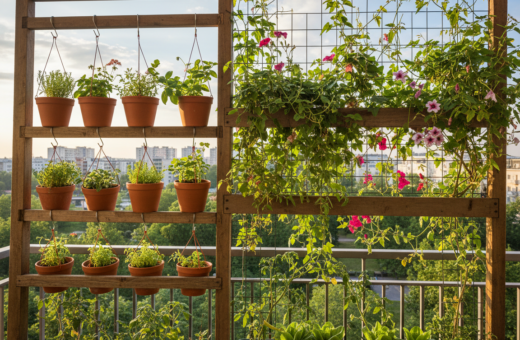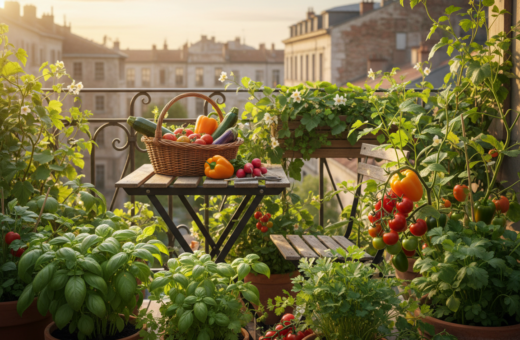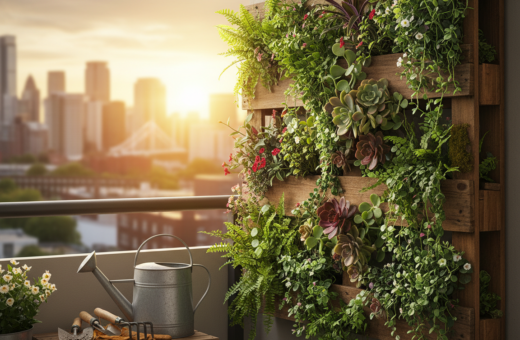
City dwellers can turn an exposed outdoor space into a quiet, green retreat. By choosing the right greenery and layout, they block sightlines and soften street noise.
Designers recommend mixing tall screening specimens with compact pots. This approach creates depth and a natural sound buffer without crowding the ledge or terrace.
A thoughtful garden plan also boosts curb appeal and gives residents a calm spot to unwind. Even a small space can feel private when foliage is placed at key sightlines.
These balcony plants arrangements can be tailored to the size and style of any urban terrace. With simple choices, a lively, secluded oasis is within reach.
The Benefits of Creating a Private Balcony Oasis
Thoughtful placement and the right foliage turn an outdoor ledge into a quiet, inviting retreat.
Aesthetic Appeal
Replacing hard railings with living textures instantly warms a small terrace. The right mix of plants and pots adds color and depth without clutter.
The dense leaves of selected shrubs act as an attractive natural barrier that looks better than metal screens.
Psychological Benefits
Greenery improves air quality by absorbing carbon dioxide and releasing oxygen, which helps overall wellbeing.
Being surrounded by green reduces stress and lifts mood, turning a tiny outdoor space into a calm zone. A well-planned garden becomes a visible extension of home life.
“A private outdoor retreat can serve as a daily reset, easing tension and offering a moment of quiet.”
- Immediate visual upgrade with varied textures and colors.
- Creates a mental refuge for morning coffee or reading.
- Selecting the right type of foliage encourages more time spent outside.
Explore practical setup ideas in this short guide: creating and maintaining an oasis.
Assessing Your Balcony Environment and Sunlight Conditions
Begin by tracking how many hours of direct sun your balcony receives each day. Observing sun and shade patterns helps identify spots that need full sun or part shade species.
Measure across a typical day and note morning versus afternoon exposure. This simple step saves time and prevents costly mismatches between a plant’s needs and the site.
Check local hardiness and soil. Knowing the USDA zone guides the selection of a type that will survive seasonal lows. Test the soil quality: nutrient-rich soil supports dense, healthy leaves and stronger growth.
- Monitor the space for one full day to map sun hours.
- Match each area to sun-loving or shade-tolerant options.
- Document findings to plan long-term screening and quiet zones.
“A careful site assessment prevents placing a plant where it will struggle.”
With a clear sunlight map and soil check, they can choose species that thrive and deliver lasting coverage and sound buffering.
Selecting the Best Plants for Balcony Privacy
Choosing species with the right size, habit, and light needs makes a compact terrace feel private and lush.
Evergreen Shrubs for Year-Round Coverage
Evergreens give steady screening and color in winter. Alex Kantor of Perfect Plants Nursery praises Japanese holly as a top pick for containers because it tolerates urban pollution and stays compact.
Measure mature height and pot size to avoid overcrowding. Good drainage and quality soil extend shrub health.
Climbing Vines for Vertical Screening
Vigorous climbers add fast vertical coverage without eating precious floor space. Jen McDonald notes that star jasmine needs minimal care once it is established.
Use trellises on railings and pair climbers with pots that drain well.
Ornamental Grasses for Texture
Grasses such as needlegrass provide movement and a light screen. Maya Argaman highlights needlegrass for summer-dry sites; it thrives in full sun or part shade.
Layering evergreens, vines, and grasses creates a dense screen that looks natural and requires routine care, water, and occasional pruning.
- Check hardiness zone and mature size before buying.
- Ensure planters have drainage and rich, well-draining soil.
- Place sun-loving species where they get full sun; move shade-tolerant types to protected spots.
Effective Strategies for Noise Reduction with Foliage
A dense line of greenery can cut city noise as effectively as a small wall. Thick leaves absorb and scatter sound waves. This reduces the hiss of traffic and muffles neighbors.
Using Dense Foliage as a Sound Barrier
Bamboo and tall shrubs work fast to build height and mass. Place large containers with trees or shrubs along the perimeter to block direct noise paths.
Layering matters: combine evergreen shrubs, hardy grasses, and a fast-growing cane like bamboo. A multi-tiered screen adds depth and traps sound more efficiently.
- Use wide planters or pots to support large root systems.
- Choose a mix that tolerates full sun and part shade conditions.
- Maintain dense leaves with regular pruning, water, and soil nutrients.
Height and density determine effect. Taller specimens provide more surface to intercept noise. Consistent care keeps the screen thick and effective year-round.
Essential Tips for Container Gardening and Soil Health
Healthy soil and roomy pots are the most reliable ways to keep a container garden thriving. Good media holds nutrients, drains well, and supports roots so leaves and flowers stay vigorous.
Choose an extra-large container when aiming to create a tall screen or add small trees. Jen McDonald, who manages 400 square feet of garden space, recommends larger planters to reduce root crowding and extend time between repots.
- Use high-quality potting mix with added perlite or grit to aid drainage.
- Ensure planters have multiple drainage holes to prevent standing water and root rot.
- Test soil pH regularly; many shrubs prefer slightly acidic to neutral conditions.
- Match species to your USDA hardiness zone and to sun exposure—use full sun or part shade choices accordingly.
Consistent care is vital. Monitor water levels, feed with a balanced fertilizer each spring, and refresh topsoil annually. A focus on soil health creates a resilient screen that withstands urban conditions and keeps plants healthy year-round.
“Proper soil pH and roomy containers give a container garden the best chance to flourish.”
Vertical Gardening Techniques for Small Spaces
Vertical systems let urban dwellers stack greenery upward and reclaim limited outdoor floor area. This approach makes the most of a narrow terrace by using walls and railings as planting zones.
Utilizing Trellises and Supports
Trellises, cables, and shelf systems let climbers gain height without wide bases. Secure supports to railings or walls and check weight limits before adding large containers.
Choose stable containers that hold enough soil to support root growth. Good drainage prevents root rot and keeps stems strong as they reach full height.
Layering Plants for Depth
Layer shorter specimens at the front and taller shrubs and trees at the back to create a dense green screen. Mixing grasses, flowering vines, and evergreen shrubs builds texture and color.
Regular care — consistent water, timely pruning, and seasonal feeding in spring — keeps the vertical composition tidy and effective in both full sun and part shade spots.
- Use rail-mounted planters to free floor space.
- Combine species with complementary root volume and water needs.
- Place taller varieties at the rear to maximize height and screening.
“A well-built support system lets climbing species reach their potential and creates a lasting living wall.”
Seasonal Care and Maintenance for Your Green Screen
Adjusting care by season helps a container screen remain dense and healthy year-round.
Prune in late winter or early spring. Trimming shrubs then encourages new shoots and a thicker screen of foliage. This timing also helps maintain shape and color before growth resumes.
They should adjust watering and fertilizing as temperatures change. Reduce water in cool months and increase light feed in spring to support leaf and flower production.
Monitor pots for stress: yellowing leaves, wilt, or salt buildup are early warning signs. Move heavy containers to sun or shade as needed to match the type and the current sun pattern.
- Prune shrubs in early spring to boost density and screen strength.
- Remove dead flowers and debris to prevent pests and disease.
- Know each specimen’s hardiness zone and protect roots and soil during cold snaps.
- Adjust water and fertilizer schedules seasonally to match growth cycles.
“Proactive seasonal care keeps a living screen functional and attractive year-round.”
Conclusion
With careful choices and steady care, a small outdoor spot can become a true retreat. They should pick the best plants to match sun exposure, zone, and pot size. Proper soil and regular water keep roots strong and leaves dense.
Start small. Assess light, choose the right type, then expand the screen over time. Shrubs, climbers, and grasses combined will add depth and reduce noise.
Creating this oasis is a simple way to enhance home life. Readers will enjoy the process as their space grows into a quiet, secluded haven.