Creating a comfortable outdoor sitting area takes simple planning and the right choices. Aaron Green, Founder of Essential Home and Garden, notes that a sun shade on your balcony protects the space from glare and adds privacy from prying eyes.
Many homeowners face intense sun during peak hours, which limits time spent outside. Practical shade ideas can turn an exposed patio or garden area into a cool, inviting retreat for relaxation and casual gatherings.
Consider the layout of your home and personal style when picking features that add separation and comfort. Proper shading protects furniture and family, and it helps the outdoor area feel like an extension of the interior.
Whether the area is narrow or wide, thoughtful choices will increase enjoyment and use. The right mix of privacy, protection, and design keeps people outdoors longer and makes the most of warmer months.
Understanding the Need for Balcony Shade
Balconies exposed to direct sun quickly become uncomfortable and rarely see regular use. Effective protection keeps the area cool and usable during peak hours.
“A sun shade on your balcony protects the space from glare and adds privacy from prying eyes.”
Excessive solar exposure harms people, pets, and plants. UV and heat can fade fabrics, stress greenery, and raise health risks for vulnerable family members.
Think of the outdoor platform as a microclimate that needs tailored protection sun strategies. A focused approach makes the area livable again.
- Reduces UV and heat buildup.
- Extends time spent outdoors.
- Preserves furniture and potted plants.
Choosing a practical balcony shade is a simple step that transforms an overheated slab into a pleasant retreat. Prioritizing this change increases comfort and privacy while protecting what matters most.
Effective Small Balcony Shade Solutions
When floor area is tight, clever design choices can create a shaded sanctuary that feels roomy. Start by mapping the layout and noting how sun moves across the space. This guides which elements best fit the plan and the budget.
Design Principles for Compact Spaces
Prioritize vertical interest over bulky furniture. A slim pergola frame or a corner parasol adds protection without using much floor area. Choose multi-use pieces, like benches with storage or foldaway tables, to maximize usable space.
Privacy Benefits of Shading
Strategic screens, fabrics, or planting can block sightlines and create a private retreat. Privacy improves comfort and lets occupants relax without feeling exposed.
- Focus on airy, light fabrics to keep ventilation.
- Pick durable materials for long-term shading and low upkeep.
- Match designs to the building facade to keep visuals cohesive.
Tip: For very tight areas, Aaron Green suggests a parasol or umbrella to form a cozy reading or coffee nook quickly and affordably.
Installing Exterior Solar Shades
Certain solar screens act like a vertical roof, cutting direct sun and making a covered patio or balcony far more comfortable. John Weinstock of Graber Blinds notes these systems are rated for exterior installation and form an effective barrier from heat.
Weather-resistant fabrics and frames keep the system working through rain and wind while also lowering indoor temperatures by stopping rays before they hit windows.
- They are energy-efficient and reduce glare for long, usable outdoor time.
- Shades raise and lower on demand, offering adjustable protection as the sun moves.
- The clean design complements modern home design and protects furniture from fading.
Properly installed, these screens protect the outdoor space and extend the life of furnishings. For inspiration, review exterior solar shade ideas on exterior solar shade ideas.
Utilizing Versatile Shade Sails
A fabric sail can transform an open area into a graceful covered retreat without heavy framing. Maanta notes these sail canopies marry coastal elegance with practical protection from sun and light showers.
Fabric Quality Considerations
Choose durable fabric that resists UV and moisture. Look for double or triple-sewn seams and high-quality PTFE thread. PTFE is heat- and UV-resistant and keeps seams intact over years outdoors.
- Cover a large patio or balcony area with a lightweight, cost-effective fabric canopy.
- Pick triangular, square, or rectangular sail formats to match the backyard layout.
- A well-tensioned sail cuts sun and creates a cool, ventilated space for dining or relaxing.
- Breathable fabric keeps the area airy on hot days while still offering protection.
- Bespoke or off-the-peg options provide flexible design choices and a timeless look.
Pro tip: Proper tension and sturdy anchors improve longevity and safety. A quality sail emphasizes both form and function for the outdoor living space.
Adding Privacy with Outdoor Curtains
Curtains made for exterior use let homeowners adjust sun and privacy without heavy construction. This option is inexpensive and creates a soft, finished look that complements the home exterior.
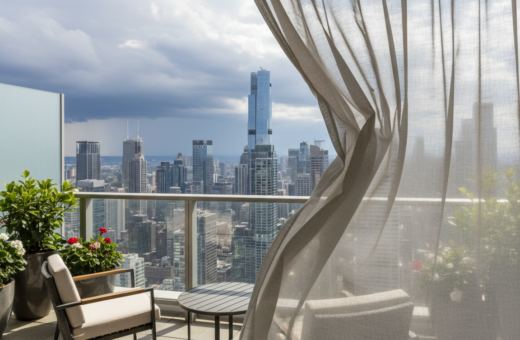
“Outdoor curtains can be hung on a balcony to provide both shade and privacy.”
Key benefits include easy operation and material longevity. Typical panels use outdoor-rated fabric like acrylic or polyester that resists fading and handles moisture.
- Adjustable coverage lets users control glare and block harsh UV rays as needed.
- Hang curtains on a rod, hooks, or heavy-gauge exterior steel wire rope for a sleek glide.
- Pick washable, quick-drying materials so the panels stand up to rain and humidity.
Used thoughtfully, curtains define the space, protect furnishings, and make a patio or balcony feel private. They are a flexible, stylish way to manage light and create comfort outdoors.
Incorporating Natural Foliage for Shade
Lush planting can turn an exposed platform into a cool, living canopy that grows more effective over time. Using greenery creates a softer, quieter edge and helps reduce sun and heat on the seating area.
Climbing Vines for Trellises
Climbing vines are easy to train up a trellis or railing to form a green wall. Robert Silver notes that hanging plants or potted vines create natural cover and privacy without heavy construction.
- Choose species suited to your US hardiness zone for best results.
- Train vines on sturdy supports to avoid wind damage.
- Evergreen climbers extend coverage through cooler months.
Trailing Plants for Hanging Baskets
Trailing plants in hanging baskets add vertical color and offer dappled screening over a seating area. They are an excellent idea for units that need foliage without losing floor area.
- Pick heat-tolerant varieties like Devil’s Ivy or Hoya for warm locations.
- Rotate and water regularly to keep baskets healthy under sun exposure.
- Plants also attract birds and pollinators, enriching the urban garden.
Benefits of Retractable Awnings
A properly chosen retractable awning offers flexible coverage that adapts to changing sun and weather all day. Lisa Cooper of Thomas Sanderson notes an awning behaves like an extra room, extending living space outdoors and adding real value to the home.
Retractable awnings can repel up to 90% of the sun’s heat and reflect harmful UV radiation. That cuts glare on a patio and lowers indoor temperatures under the adjoining roof.
Key advantages include adjustable light control and year-round protection from rain and wind. Motorized models open with a button, giving instant cover for furniture and fabrics.
- Custom fabrics and patterns match the home’s design and style.
- They protect outdoor furnishings and reduce cooling costs by shading windows.
- They turn an open area into a usable room for dining or relaxing.
Practical idea: choose a durable fabric and a tested mounting plan to ensure long life and reliable protection for your balcony and adjoining space.
Upgrading to Smart Awning Technology
Modern awnings now act like weather-aware extensions of the house, reacting to light and gusts automatically.
Smart upgrades automate shading and protect the outdoor space without manual effort. They help keep furnishings safe and extend usable hours under sun or clouds.
Sun and Wind Sensors
Sun sensors detect bright light and trigger the awning to open. Wind sensors monitor gusts and vibrations. When wind picks up, the system retracts the canopy to protect the structure and avoid damage.
Integrated Lighting Features
LED strips or spotlights attach to the mounting bar. Users can program dimming, color cycles, or timers to turn the balcony into an evening room.
Voice Controls and Smart Hubs
Linking awnings to a smart hub enables voice commands and scheduling. Some models even add infrared heaters for cool nights, making the pergola-like setup more functional year-round.
- Automated comfort: schedules and sensors keep the space ready.
- Safety first: wind detection protects the canopy and structure.
- Enhanced design: lighting and controls blend technology with style.
Selecting the Right Balcony Umbrella
Choosing the ideal umbrella begins with measuring the seating area and noting where the sun hits most. This simple step helps match an umbrella’s span and tilt to the intended patio use.
Cantilever designs remove the center pole for more flexible seating. Ashley Newton of ShadeScapes Americas explains they free up floor space and let users place furniture directly under the canopy.
Half-round umbrellas sit flush to a wall and work well for very tight spots. They offer a budget-friendly option that still gives useful cover for a table or chairs.
- Decide between a center-pole or cantilever based on furniture layout and wind exposure.
- Pick a tilting umbrella to track sun movement and keep the protected area comfortable all day.
- Check fabric quality and base weight to ensure stability in higher wind areas.
- For those on a budget, a market umbrella delivers reliable protection without a large investment.
Tip: match the umbrella design to your awning or porch for cohesive backyard styling and consistent protection sun coverage.
Growing Potted Trees and Shrubs
Using extra-large planters to grow trees gives city dwellers a way to enjoy canopy-like relief and privacy. Bert Stouffer, CEO of PolyStone Planters, notes that trees can thrive in oversized containers and make a balcony feel like a planted room.
Choosing Suitable Planters
Pick containers that match root needs. A deep, durable planter supports healthy roots and reduces watering frequency. This helps trees and shrubs establish faster in a confined space.
- Lollipop standards offer a formal accent near seating for defined sightlines and neat canopy.
- Multi-stem or weeping specimens give a relaxed, woodland feel and produce dappled shade over the patio.
- Dwarf fruit trees on compact rootstock deliver both cover and fresh fruit for urban gardeners.
- Account for the microclimate—wind, reflected heat, and light—when selecting species and pot material.
Final idea: With the right planters and plant choices, any exposed outdoor area can become a lush, private garden that cools the space and enhances comfort under an umbrella or open sky.
Constructing Permanent Pergola Structures
A well-planned pergola becomes the backbone of an outdoor room, offering structure, privacy, and year-round use.
Timber pergola options bring warmth and a classic feel to a large balcony or patio. Homeowners often train vines and climbers through the beams to create a living canopy that softens the wood over seasons.
Modern aluminum pergolas suit sleek, contemporary designs. Many models include an adjustable roof or an integrated awning that tilts or closes for full protection. These systems make shading effortless and smart.
Plan carefully before building. Verify the balcony’s weight capacity and check local codes so the permanent structure is safe and compliant. A sturdy pergola is an investment that adds value to a backyard and defines usable outdoor space.
Enhancements to consider:
- Sheer curtains for added privacy and soft light control.
- Lush plantings to turn the frame into a green canopy over time.
- Motorized louvered roofs for instant, weather-ready comfort.
Quick Fabric Fixes for Immediate Relief
Using household linens to make a temporary roof is an easy, budget-friendly fix that adds instant cover from the sun. A flat bedsheet, throw, or tablecloth can be stretched over railings and tied to posts to form a basic canopy.
Curtain clips, clothes pegs, and safety pins secure panels to existing hardware or discreet steel hooks. These tools let anyone create a neat fabric canopy with no drilling and minimal cost.
Quick fabric fixes give immediate relief and work well for a hot week or short-term use. They keep a patio or outdoor space usable while a more permanent plan is chosen.
- Fast setup: lightweight panels are easy to install and remove.
- Flexible coverage: run table runners or cut fabric in parallel to cover wider spans.
- Weather note: drape material so water runs off and consider water-resistant cloth if rain is likely.
For renters or those short on time, this method creates a stylish, functional cover that works with an umbrella or a sail later on. It is a low-risk way to test placement before committing to a permanent install.
Reducing Ambient Heat on Your Balcony
Smart coverings and a few well-placed plants transform a hot outdoor area into a cool, usable retreat.
Lisa Cooper notes that adding cover above a balcony protects outdoor furniture from the harsh sun and helps keep the adjoining interior room noticeably cooler.
Natural elements also lower temperature. Water features and leafy plants provide evaporative cooling and filter warm air. Over time, this combination reduces heat absorbed by concrete or decking.
Practical ways to cut ambient heat:
- Use light-colored fabric covers or a reflective roof panel to bounce rays away.
- Place potted plants to create shade for the floor and encourage transpiration.
- Avoid overcrowding the area with bulky furniture so air can flow freely across the space.
- Add a small water feature to boost local cooling through evaporation.
Keeping this approach balanced preserves the link between your outdoor patio and the home. A cooler balcony gives better shelter from heat and makes the room beyond feel fresher all summer long.
Choosing Between Manual and Motorized Systems
Frequent use and convenience often push homeowners toward motorized awnings, while simplicity favors manual options.
Motorized systems open and close at the touch of a button. Many high-quality awnings include a handheld remote as standard. They can be integrated with sensors and smart controls for automatic operation.
Manual systems rely on articulated spring-loaded arms or a crank. This option is cost-effective and less complex. It often proves more durable and easier to repair than motorized drives.
Key factors to weigh:
- Use frequency and ease: motorized for frequent adjustment; manual for occasional use.
- Budget and maintenance: manual costs less upfront and has fewer failure points.
- Build quality: check fabric and arm strength to ensure the structure lasts.
For a deeper comparison, see the detailed guide on motorized vs manual retractable awnings.
Bottom line: Choose the option that matches daily use, the size of your balcony, and your willingness to invest in automated convenience or a simpler, robust solution.
Assessing Your Balcony Weight Capacity
Start by checking how much weight the floor can bear so any added feature stays safe and secure.
Before adding heavy fixtures, verify structural limits. Consult a structural engineer or your property manager to confirm load ratings and building rules.
- Assess total added weight, including furniture, planters, and any permanent frames.
- Distribute large planters so the balcony’s support beams share the load evenly.
- Ensure anchoring points for a pergola or mounted fixture are secure and rated for wind forces.
- Follow local codes and get written approvals when anchors penetrate the slab or railing.
Safety should guide every choice. A careful capacity check prevents structural damage and reduces accident risk. With proper verification, homeowners can pick additions that are both attractive and structurally sound.
Conclusion
Key takeaway: With the right mix of plants, textiles, and a durable structure, an exposed outdoor spot becomes an inviting room for everyday use.
They can choose an umbrella or umbrellas for instant cover, add curtains for privacy, and plant trees to form a living canopy over time. Each idea boosts comfort and makes outdoor spaces feel more private and purposeful.
Owners should check weight limits and local rules before adding heavy planters or fixed frames. Investing in quality materials and thoughtful design helps the area work with the home and the backyard aesthetic.
Start small, plan well, and the result will be a calm, usable outdoor room that lasts.