Transforming a slim outdoor area into a usable room takes clear planning and smart choices. They often ignore this extra zone, yet it can add meaningful space to an apartment if handled with care.
Good selection prevents the area from feeling cluttered or blocked. The right narrow balcony furniture layout makes the zone inviting and easy to move through. It should flow from the interior so the transition feels intentional and cohesive.
The Chicory editorial team calls these spots bonus rooms. When designers treat them that way, the result feels like an extension of the main living area. They recommend picking pieces that keep sightlines open and leave room for fresh air.
– Treat the area as a bonus room for added living space.
– Choose items that keep the space open and connected to the apartment.
Understanding the Potential of Your Narrow Balcony
With a clear plan, even a tight exterior strip becomes a useful extension of an apartment.
Most compact outdoor space ranges from 24 to 60 square feet. Knowing that scale helps homeowners pick realistic ideas and avoid overcrowding.
One real example: designer Jess Bunge turned a 30-inch by 20-foot rail area into a restful slice of living space by picturing how she wanted to use it. Many residents leave such spots empty, but small changes add real value.
- Measure first: confirm usable floor area and clearance.
- Consider sun and privacy: orientation affects plant choices and screening.
- Focus on function: decide if the outdoor space will be for dining, reading, or storage.
Smart design ideas let people maximize utility without making the area feel cramped. Thoughtful choices make these narrow balconies feel like intentional, livable places that connect to the apartment.
Essential Principles for a Narrow Balcony Furniture Layout
Good planning starts with a tape measure and a clear idea of how the area will be used. Clear intent makes the most of a tight outdoor strip and protects sightlines to the interior.
Measuring Your Footprint
Before purchasing any furniture, measure the usable depth and width. Leave at least 2 feet of walking path so the door stays accessible.
Accurate dimensions stop people from buying oversized pieces that crowd the space. Proper measurement helps pick items that match the scale of the balconies and prevent overcrowding.
Maintaining Traffic Flow
A well-planned plan prioritizes traffic flow so doors open freely and seating does not block movement. Designers like Cynthia Masters stress that a small balcony should feel open and breathable.
“The goal for any small balcony is to create a setting that feels open and breathable.”
- Define a clear walking path before placing pieces.
- Avoid filling every inch; empty space improves comfort.
- Choose items that support easy access to the door.
Selecting Space-Saving Seating Options
Picking the right seating turns a slim outdoor strip into a go-to spot for morning coffee or evening unwind. Compact choices help keep the door clear and make the area feel intentional.
Modular seating offers real advantages. It lets residents connect and separate sections to suit different uses. These configurations fit tight space and adapt when plans change.
Benefits of Modular Seating
Modular pieces make the most of limited room. A single lounge chair or a small loveseat creates a cozy relaxation zone without taking up the area of a full sofa.
“Modular systems allow you to maximize seating while keeping the area flexible.”
- Modular setups adapt to a variety of uses and can be moved or stowed as needed.
- Choose stackable chairs that nest to save floor space when they are unused.
- Look for weather-ready outdoor furniture that balances comfort with durability.
- Selecting the right seating pieces is critical where every inch counts, especially on a small balcony.
Tip: prioritize items that free up walking paths and support social moments. Thoughtful choices let balconies feel like true extensions of the home.
Maximizing Floor Space with Folding Tables
Fold-down tables transform tight outdoor strips into useful tabletop zones without stealing valuable floor space.
Wall-mounted fold-down tables attach to the wall or railing to save the most space. When closed, they sit flat and keep the path clear.
Folding bistro tables are a classic pick for a small balcony. They fold flat against the wall when not in use and are easy to move for quick cleaning.
- A table that clips onto the railing uses zero usable floor space and is ideal for very tight strips.
- Drop-leaf tables give flexible surface area; flip out the side for meals, then tuck it back to reclaim floor space.
- Collapsible pieces keep the area versatile so it can shift between dining, work, or relaxation.
Tip: choosing compact tables and multiuse furniture helps balconies feel open and functional without crowding the walking path.
The Benefits of Vertical Storage Solutions
Using height instead of floor area makes a small space feel larger and more organized. Vertical systems keep items visible and easy to reach while preserving floor circulation.
Wall-mounted shelving is a top choice for small balcony projects. Shelves free up floor space and let plants, books, or lanterns sit neatly at eye level.
Wall-Mounted Shelving
Pick narrow shelves that attach to the wall or railing. Floating units keep sightlines open and avoid blocking doors.
- Use multiple shallow shelves to hold pots, trays, and small decor.
- Combine open shelves with a closed cabinet for weather-sensitive items.
- Place a storage bench along the side to hide cushions and offer seating.
Hanging Organizers
Hanging organizers work on the wall or railing and are ideal for tools, watering cans, and odds and ends.
Tip: choose waterproof fabrics and hooks rated for outdoor use.
For more inspiration and vertical space tips, see creative storage ideas.
Choosing Durable Materials for Outdoor Exposure
Choose materials that can shrug off rain, sun, and seasonal swings to keep the space useful year-round.
Frame first: select powder-coated steel or aluminum frames. They resist rust and stay lightweight for easy placement on a balcony.
- All-weather wicker: looks natural and tolerates sun and rain without fading quickly.
- Treated wood: teak and acacia add warmth but need occasional oiling to age well.
- Consider climate: match choices to local weather and intense UV exposure to avoid warping or discoloration.
- Invest in quality: durable, weather-resistant outdoor furniture costs more up front but stays stylish and functional for years.
Tip: prioritize materials that balance appearance with low maintenance so the small outdoor room feels cared for with minimal effort.
Enhancing Comfort with Textiles and Rugs
Smart use of cushions and rugs gives a compact space instant personality and comfort. Textiles add warmth, color, and sound absorption without taking up floor area. They also protect surfaces and make seating feel inviting.
Selecting Weather-Resistant Fabrics
Choose materials made for outdoor use to keep items dry and mildew-free. Acrylic and solution-dyed polyester resist fading and shed water quickly.
Thick outdoor cushions transform simple seating into a cozy spot for reading or relaxing on your balcony. Throw pillows made from weather-resistant fabrics add color and back support for outdoor furniture.
- Pick quick-dry fill and UV-resistant covers.
- Use an outdoor rug to define the seating area and soften underfoot.
- Store cushions in a waterproof box during heavy rain to extend life.
Tip: textiles are an easy, low-cost way to boost comfort and make the outdoor area feel like an extension of the home. Replace or refresh covers seasonally to keep the look current.
Creating Distinct Zones for Different Activities
Smart zoning turns limited outdoor real estate into multiple usable spots for eating, relaxing, and working. By assigning clear roles, the space feels larger and more useful.
Dining Areas
Choose compact dining pieces like a bar-height table with stools. This occupies less footprint than a full dining set and keeps circulation open.
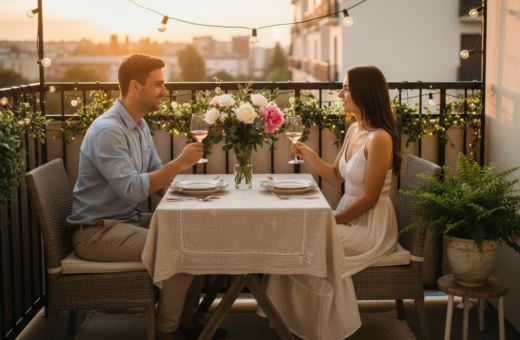
A rail-mounted table or a slim drop-leaf table works well for two. It lets residents enjoy meals and fresh air without blocking the door.
Relaxation Zones
For relaxation, a comfortable chair or chaise lounge with weather-ready cushions creates a cozy nook. Add a small side table to hold a drink or book.
Grouping seating and plants signals a dedicated rest area and separates it from dining or working zones.
Work-from-Home Spots
Turn a corner into a compact office with a narrow table and ergonomic chair. Use vertical shelves to store supplies and keep the floor clear.
- Bar table with stools saves footprint for dining.
- Chair or chaise plus a side table fosters relaxation.
- Careful arrangement separates dining and relaxation, making the small balcony feel larger.
Incorporating Greenery for a Lush Retreat
A thoughtful mix of pots and hanging planters can make even the smallest outdoor space feel like a garden retreat.
Start with a variety of containers: tall architectural pots, mid-height planters, and low bowls. This builds depth and keeps the eye moving through the space.
A vertical garden is a strong option for a lush retreat. It draws the eye upward and adds privacy without taking usable floor space. Wall-mounted pockets, trellises, or stacked planters work well for small balcony setups.
“Position plants at different heights to create a balanced and orderly palette for your balcony.”
Practical tips:
- Group tall, structural plants at the back and low bowls in front to create layered interest.
- Match plant choices to sun exposure; full sun needs differ from shady aspects.
- Use mixed pots and vertical elements to soften hard edges and turn overlooked corners into a living sanctuary.
Using Lighting to Set the Mood
A soft glow can turn a compact outdoor space into an inviting evening retreat.
Lighting defines how the area feels after dark. It also makes the space usable for dinner or reading.
Solar and Battery-Powered Options
When outlets are absent, solar and battery-powered lights offer an easy way to add ambiance without wiring. They charge by day and glow at night.
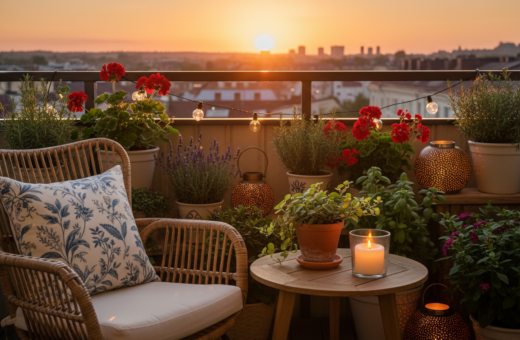
String lights wrapped around a railing create instant warmth and a festive feel. Portable lanterns and lamps add a pop of color and style.
- Flexible mood: dimmable or layered lights let residents shift tone for dinner at the table or a quiet night in chairs.
- Solar stake lights and clip-on battery lamps are simple to install and move as needed.
- Mix warm-white bulbs with colored lanterns to add interest without overwhelming the small balcony.
- Proper lighting keeps the area safe and ensures it stays a usable space after sunset.
Styling Your Balcony as an Extension of the Home
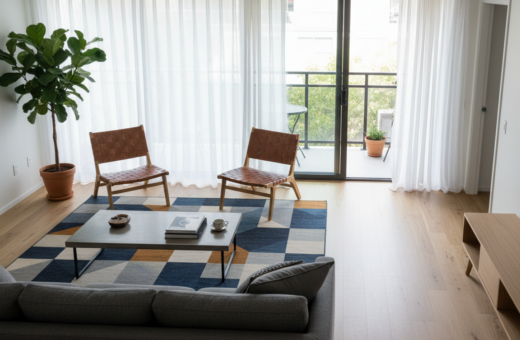
Dress the exterior space so it reads like the next room in your apartment. Use textures and silhouettes that echo the interior to make the area feel deliberate and connected.
Designer Ashi Waliany recommends matching key color tones and repeat fabrics to blur the line between inside and out. Small, curated pieces build cohesion without crowding the space.
Mirrors and vertical accents draw the eye upward and create a sense of depth. Caitlin used Sunbrella fabric curtains to cover a bar wall and add a soft, weather-resistant layer that reads like indoor drapery.
Tip: pick durable outdoor living decor—curtains, rugs, and washable cushions—to bridge comfort and climate resistance.
- Match a palette: align the balcony colors with the apartment for a curated look.
- Choose multifunctional pieces: they make the small balcony feel like a usable room.
- Keep scale in mind: simple silhouettes preserve sightlines and living flow.
Safety Considerations for Elevated Outdoor Spaces
Before adding charm, verify that your elevated space meets basic structural and exit requirements. This step prevents avoidable hazards and keeps the area usable for everyone.
Check load limits: confirm the building’s weight rating before placing heavy furniture or planters. Exceeding the load can damage the structure or create unsafe conditions.
Secure items against wind: anchor light pieces and choose stable seating that resists tipping. In high-rise locations, gusts can move unsecured objects quickly.
- Keep exits and doorways clear so people can leave quickly in an emergency.
- Prefer lower-center-of-gravity pieces and weather-rated fasteners for anchors.
- Store loose items during storms to avoid hazards from flying debris.
Safety is not optional: regular checks keep the outdoor area safe and enjoyable. When in doubt, consult building management or a structural pro before adding new items.
Managing Weather and Seasonal Changes
Preparing for seasonal shifts makes it easier to keep a small space safe and usable. Good planning means the outdoor area stays inviting through rain, snow, and heat.
Choose items that are simple to cover or store. Select weather-resistant pieces for a dining spot and seating so they last longer with minimal care. Jess Bunge’s DIY trick of using IKEA plastic outdoor tiles creates a quick, removable floor that protects the deck and adds traction.
- Pick interlocking tiles that are weatherproof and non-slip for safety.
- Use waterproof storage boxes for cushions and seasonal textiles to extend life.
- Opt for stackable or foldable pieces to free up space when storms arrive.
Tip: plan storage and covers as part of the design so plants, decor, and seating survive the seasons and the area stays ready for regular use.
Creative DIY Ideas for Small Balconies
Budget-friendly upgrades make a small outdoor area feel curated and functional.
Green wall with bamboo and faux plants is an easy, renter-friendly solution. One reader in New York built a bamboo fence and added faux greenery for about $500 to create a calm garden vibe.
Refresh the floor with painted tiles or brick pavers to add a pop of color and rustic charm. A small rug can warm the space and define a seating zone.
Use reclaimed wood to craft a swing or a storage bench. This adds character and hides cushions or tools while providing extra seating.
Install a wall-mounted table or hang chairs for dining and lounging without losing floor area. These projects need minimal tools and are simple to remove when moving.
Tip: pick hardy materials and bright accents so the spot reads like an intentional room. Clever DIYs transform small balconies into personal retreats that feel both practical and stylish.
- Green wall with faux plants and bamboo
- Painted tile or paver floor for color
- Reclaimed wood swing or storage bench
- Wall-mounted table and hanging chairs for renter-friendly use
Avoiding Common Design Mistakes
Crowding a small outdoor room with too many pieces kills both flow and enjoyment. People should prioritize clear sightlines and leave breathing room so the space feels like an inviting retreat.
Scale matters. Choosing a chair or bench that is too large will make the room feel cramped. Also, avoid using indoor pieces that are not rated for exterior use; they fade and degrade quickly when exposed to weather.
Edit down to essentials: a compact table, two chairs, a couple of plants, and weather-ready cushions often provide comfort and style without overload. Focus on pieces that serve more than one purpose and protect floor space for movement.
“Less is more: a curated selection keeps the area usable and beautiful.”
- Resist clutter—leave space for fresh air and walking paths.
- Confirm outdoor rating before buying any outdoor furniture or textiles.
- Use storage and wall solutions to keep floor space clear.
Tip: regular editing and a clear plan help small outdoor spaces stay useful, safe, and stylish.
Conclusion
Thoughtful tweaks can transform an overlooked exterior strip into a comfortable, stylish room that extends the apartment’s living area into usable outdoor space.
Focus on smart seating and simple ideas that keep circulation open and invite regular use. Layered textiles, warm lighting, and plants bring both comfort and style without crowding the area.
Use vertical storage to free floor room and keep essentials close. A few modular or DIY touches make maintenance easy and extend the season for outdoor living.
Good design is a practical way to create a retreat they will actually use. With these professional tips, people are ready to enjoy a beautiful, inviting space all summer long.